

close
Choose Your Site
Global
Social Media
Views: 0 Author: Site Editor Publish Time: 2026-10-30 Origin: Site


Designing a functional kitchen in a tight space presents a strict spatial puzzle. You must maximize limited square footage. However, you cannot sacrifice essential cooking performance. Standard 30-inch appliances tend to dominate smaller rooms. They leave little physical room for necessary cabinetry, comfortable prep areas, or natural foot traffic. Passionate home cooks are often forced to choose between decent counter space and a capable stove.
The most practical and elegant solution to this dilemma is scaling down your appliance width. By trimming the exterior dimensions without stripping away core functionalities, manufacturers have created space-saving units tailored for serious cooks. This comprehensive guide explores the tangible benefits of choosing a compact 24 inch gas range. We will compare installation styles and dive into critical technical features like internal capacity and burner layouts. You will gain the objective engineering insights needed to make a confident purchasing decision for your upcoming kitchen renovation.
Space Optimization: A scaled-down gas stove saves valuable cabinet and floor space. This optimization allows for vastly improved kitchen ergonomics.
Versatile Installation: Designed as an independent unit, it is significantly easier and more cost-effective to install compared to built-in models.
Uncompromised Power: Modern compact units still feature a robust layout. A smaller footprint does not dictate lower heat output.
Surprisingly Spacious: Despite the narrow exterior profile, modern internal designs provide ample room for daily baking and large-scale holiday roasting.
Recent market analyses indicate a massive transformation in the kitchen appliance sector. Urban densification is accelerating rapidly. Meanwhile, minimalist lifestyles are gaining mainstream traction. Consequently, the global market for compact household appliances is experiencing robust year-over-year growth. Industry experts note that modern consumers no longer accept the bare-bones quality of past downsized stoves. There is a surging demand for premium residential-grade features packed into a tighter footprint. This evolution reflects a broader architectural trend. Extreme spatial efficiency and high-end culinary design must now coexist seamlessly.
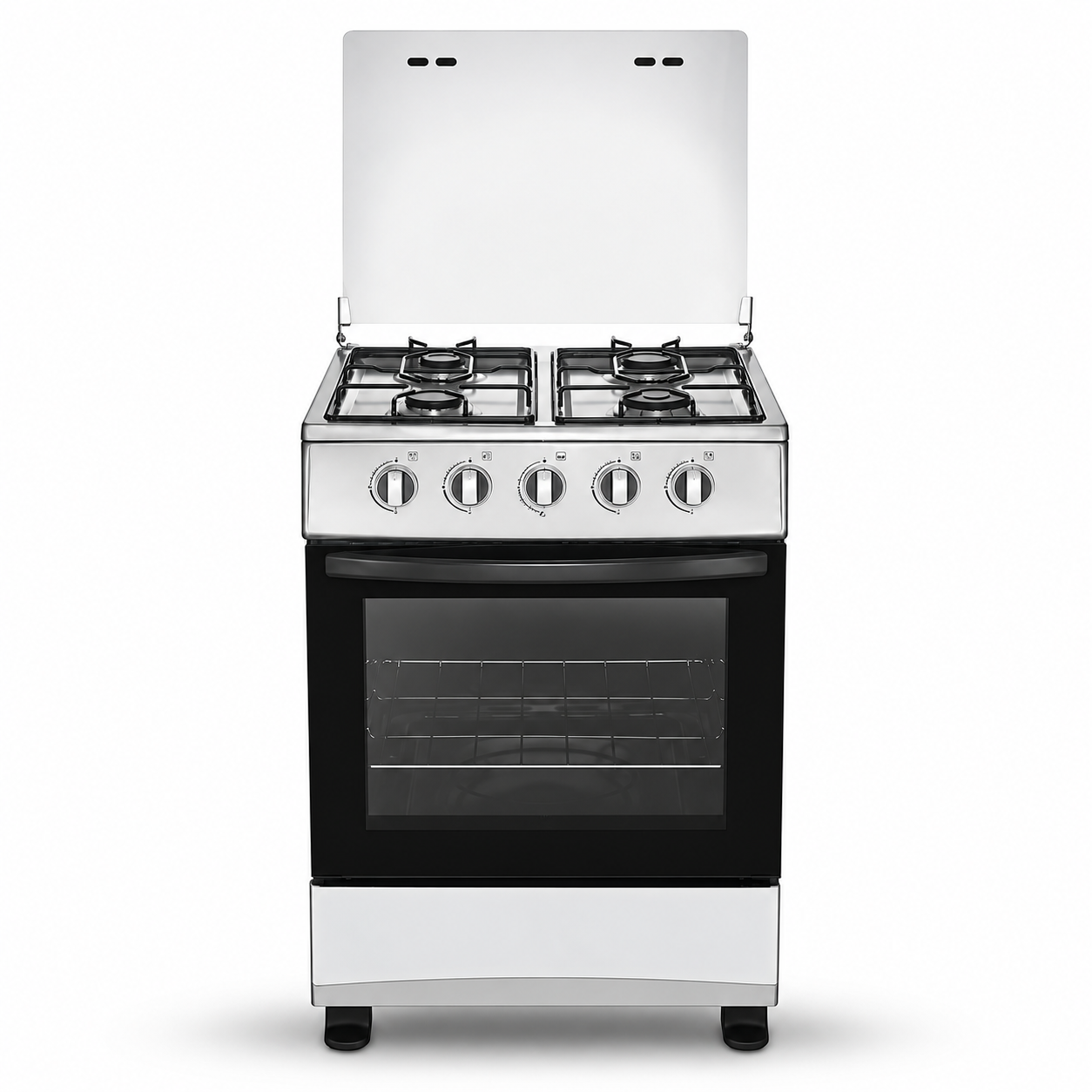
Before diving into specific lifestyle benefits, we must establish exactly what defines this category of appliance. The 24-inch designation simply refers to the exterior width of the unit. This dimension is six inches narrower than the American standard. However, the structural design and installation method truly dictate its utility. Unlike built-in cooktops or separate wall ovens, a freestanding cooker is a complete all-in-one appliance. It features a versatile cooktop surface mounted directly above a dedicated baking cavity.
Crucially, these units feature fully finished side panels. They typically include an integrated backguard where the oven vents are safely housed. This finished wrap-around design means the appliance can be placed virtually anywhere in the kitchen with a dedicated gas line. You can seamlessly slot it between existing base cabinets. Alternatively, let it stand completely on its own at the end of a counter run without exposing unsightly internal components.
When shopping for a new stove, consumers frequently encounter the choice between slide-in and freestanding models. Understanding this structural distinction is vital for accurate kitchen planning. Slide-in ranges are engineered specifically to create a customized look. Because they lack finished side panels, they must be wedged perfectly between two cabinets. Furthermore, they do not have a rear backguard. The controls are mounted on the front lip, and the cooktop edges often overlap the adjacent countertops. While undeniably sleek, they require highly precise cabinetry dimensions and carry a premium price tag.
In contrast, freestanding models offer unmatched versatility. Their sides are aesthetically finished. Therefore, they do not rely on surrounding cabinetry to look complete. This engineering approach makes them more budget-friendly and significantly easier to replace in the future. If you decide to remodel your kitchen layout down the line, an independent unit can be easily relocated without requiring expensive custom cabinet modifications.
Feature | Freestanding Gas Range | Slide-In Gas Range |
|---|---|---|
Side Panels | Fully finished stainless steel or enamel | Unfinished exposed internals |
Installation Flexibility | High. Can stand alone or between cabinets | Low. Must be installed tightly between cabinets |
Backguard | Included built-in rear guard for venting | None requires a tiled backsplash |
Cost Efficiency | Highly cost-effective and easy to replace | Premium pricing with strict cutout demands |
Selecting a downsized range is a strategic architectural decision. It dramatically impacts the overall flow, efficiency, and visual appeal of your kitchen. Beyond the obvious spatial benefits, there are several compelling engineering reasons to embrace a smaller appliance.
By opting for a narrower model, you instantly reclaim six inches of horizontal space. In a compact galley kitchen or a studio apartment, six inches is a massive amount of real estate. You can reallocate this saved space to widen a base cabinet for larger pots. You might install a convenient pull-out spice rack or increase the basin size of your sink. This optimization prevents the space from feeling claustrophobic. It vastly improves the ergonomic work triangle between the stove, sink, and refrigerator.
Thermodynamics dictate that a smaller enclosed volume requires less energy to heat. A compact unit has a smaller internal volume than a standard 30-inch model. Consequently, it reaches optimal baking and roasting temperatures much faster. This rapid preheating reduces the amount of natural gas or liquid propane consumed during everyday cooking tasks. Over the lifespan of the appliance, this translates to measurable utility cost savings. Aesthetically, manufacturers outfit these units with sleek stainless steel finishes, edge-to-edge cast-iron grates, and heavy-duty control knobs. Your kitchen retains a sophisticated modern look.
A persistent misconception among consumers is that a smaller cooktop inherently lacks necessary firepower. In reality, brilliant modern engineering allows compact ranges to deliver professional-grade thermal performance that rivals larger counterparts.
A well-designed 4 burner gas range fits perfectly onto a reduced cooktop without causing frustrating pan collisions. The layout is meticulously staggered. This ensures multiple pots and pans can be utilized simultaneously. You can comfortably maintain a rolling boil for pasta on a high-output front burner while gently simmering a delicate marinara sauce on the rear. The inclusion of continuous interlocking grates allows home chefs to safely slide a heavy cast-iron skillet from one heat zone to another without lifting. This maximizes the usability of every square inch.
High-quality compact ranges do not simply shrink the burners. They utilize an advanced gas manifold to offer varied heat outputs accommodating diverse culinary techniques. A standard premium setup includes a rapid burner designed for quickly boiling large stockpots. This is complemented by semi-rapid burners for everyday sautéing. Finally, a dedicated auxiliary burner is engineered for melting butter or keeping sauces warm without scorching the bottom of the pan. This precise heat control ensures you have the exact thermal power required for any recipe.
When transitioning to a narrower appliance, buyers frequently express anxiety over internal baking space. They worry about hosting dinner parties or executing complex holiday menus. However, the internal geometry of these modern appliances is highly efficient. Bigger is not always necessary.
Understanding capacity in liters can feel abstract. An 88L oven is approximately equal to 3.1 cubic feet. While mathematically smaller than a standard 5.0 cubic foot cavity, it is practically sufficient for the vast majority of residential cooking tasks. To put this into a real-world perspective, an 88-liter cavity easily accommodates a standard 9x13 inch glass baking dish. It holds a half-sheet pan for roasting vegetables or a 12-cup muffin tin with room to spare for air circulation. During the holidays, it provides enough depth and vertical clearance to comfortably roast a 15-pound turkey to a perfect golden-brown crisp.
Interestingly, a smaller oven cavity often results in superior baking performance. Because the physical space is reduced, the radiant heat source is closer to the reflective walls and the food itself. The ambient temperature inside the oven stabilizes more quickly after the door is opened and closed. This proximity reduces annoying cold spots and facilitates excellent ambient heat distribution. Whether you are baking delicate pastries or broiling a thick cut of meat, the concentrated heat environment ensures reliable restaurant-quality results.
While a space-saving stove functions beautifully in any standard home, it provides the absolute highest return on investment in specific architectural scenarios. In these environments, spatial optimization is a strict requirement.
In dense urban real estate markets, square footage is sold at an extreme premium. City apartments and modern lofts often feature open-concept layouts where the kitchen visually blends into the main living area. Installing a compact gas stove ensures the culinary zone remains fully functional without aggressively encroaching on the shared dining space. It preserves a clean and airy aesthetic.
Backyard guest houses and basement suites are rapidly growing housing trends. They require autonomous fully equipped kitchens within strict footprint limitations. A compact freestanding model provides the complete cooking independence required by long-term tenants. It strategically leaves enough room for standard-sized sinks and essential food storage cabinetry.
The tiny house movement and luxury recreational vehicle renovations have driven massive demand for residential-style compact appliances. Traditional mobile stoves are notoriously flimsy. They lack the durability and thermal power of household appliances. Installing a residential-grade gas range in a stationary tiny home instantly elevates the cooking experience. It offers heavy-duty grates and reliable temperature control that travel-specific appliances simply cannot replicate.
Investing in a major kitchen appliance requires careful evaluation of technical specifications and safety standards. To ensure a seamless integration into your home, consider the following objective criteria before finalizing your purchase.
Precision is critical to avoid costly installation headaches. Even though a range is advertised as exactly 24 inches, you must measure your exact cabinet cutout. Verify a minimum 24 1/8-inch clearance between base cabinets. This allows the unit to slide in smoothly without scraping the wood. Measure the depth to ensure the oven door can open fully without hitting an island. Additionally, factor in the rear gas valve protrusion. Older plumbing might require a recessed wall box for the appliance to sit entirely flush against the back wall.
The material of the cooktop grates significantly impacts both longevity and daily usability. Always prioritize models equipped with heavy-duty continuous cast-iron grates. Cast iron retains heat exceptionally well. It provides a stable non-slip surface for heavy cookware. The continuous aspect is particularly vital on a smaller cooktop. It allows you to utilize the flat space directly between the burners for resting hot pans off the flame.
When dealing with combustible gas appliances, safety protocols cannot be compromised. Ensure the model you select features a built-in Flame Failure Device. This crucial safety mechanism utilizes a reliable thermocouple system. It automatically detects if the flame is accidentally extinguished by a sudden draft or a boiling pot spilling over. It instantly shuts off the gas supply to prevent dangerous leaks. Furthermore, push-to-turn safety knobs add a necessary layer of protection against accidental ignition.
Proper professional installation and a routine maintenance schedule are imperative. They maximize the lifespan, efficiency, and safety of your new gas appliance.
Freestanding units are physically easier to position than built-ins. However, the actual gas line connection should always be executed by a certified professional. Verify that you have the correct gas supply, whether Natural Gas or Liquid Propane. Secure the appropriate conversion kit if your home requires it. Proper ventilation is also mandatory. A range hood with an adequate extraction rating must be installed above the cooktop to remove hazardous combustion gases and airborne grease. Finally, safety regulations require the installation of an anti-tip bracket. This hidden metal device secures the rear leg of the range to the floor, preventing the entire unit from tipping forward.
Maintaining a compact range requires consistent yet simple cleaning habits. For the stainless steel exterior, use a soft microfiber cloth and a dedicated polish. Always wipe in the direction of the metal grain to prevent micro-scratches. Opt for models with sealed gas burners. This design prevents food crumbs and liquids from falling into the internal mechanics of the cooktop. Clean the burner caps regularly by soaking them in warm soapy water. To maintain the internal cavity, wipe down the walls with a non-abrasive degreaser immediately after heavy roasting. This prevents stubborn grease buildup and smoke during future baking sessions.
Choosing to downsize your kitchen appliances no longer means sacrificing your culinary ambitions. A carefully selected compact gas range saves incredibly valuable floor and counter space. It dramatically improves the workflow of tight environments. With a robust four-burner cooktop capable of handling complex recipes and an efficiently designed 88-liter oven that easily accommodates holiday roasts, these units deliver professional-grade performance in a perfectly scaled package. By prioritizing essential engineering features like continuous cast-iron grates and advanced thermocouple safety mechanisms, you can transform your small kitchen into a highly capable modern culinary workspace.
Ready to upgrade your compact kitchen without compromising on performance? Explore the premium lineup of space-saving appliances at Ridax. Find the perfect freestanding gas range engineered to meet your exact spatial and culinary requirements today.
Yes, absolutely. With an optimized four-burner cooktop layout and an efficiently designed 88-liter oven capacity, a compact range can easily handle the daily meal preparation requirements for a standard family of three to four people. The key to maximizing its utility lies in using appropriately sized cookware and leveraging continuous grates to manage multiple pots at once.
You can certainly make the switch. However, doing so will leave a noticeable six-inch horizontal gap in your existing cabinetry. To maintain a cohesive and finished kitchen design, you will need to creatively bridge this space. Practical solutions include installing a slim six-inch pull-out spice rack or adding custom wood filler panels.
The primary difference lies in the exterior finish and installation requirements. A freestanding cooker features fully finished side panels and usually includes a raised backguard. This allows it to stand completely independently. A slide-in range features unfinished sides and front-mounted controls without a backguard. It requires tight installation between custom cabinetry to function properly.
Yes, it does. Despite the narrower exterior, an 88-liter internal capacity provides sufficient depth and width to comfortably roast a standard 15-pound holiday turkey. Depending on the specific height of your roasting pan, there is generally enough vertical space remaining to remove the upper racks and allow the bird to cook evenly.
No, a compact gas range utilizes the exact same standard residential gas line connections as larger 30-inch or 36-inch models. You simply need to ensure whether your home is supplied with Natural Gas or Liquid Propane, and verify that the appliance is configured or converted properly for that specific fuel type prior to installation.
Yes, modern compact gas ranges are engineered with stringent safety standards for indoor residential use. Premium models are equipped with a Flame Failure Device that automatically cuts off the gas supply if the flame extinguishes. As with any indoor gas appliance, proper overhead ventilation through a range hood is required to safely exhaust combustion byproducts.


