

close
Choose Your Site
Global
Social Media
Views: 0 Author: Site Editor Publish Time: 2026-10-01 Origin: Site


Picture this. You spend an hour prepping a delicate hollandaise sauce or searing a premium steak. Suddenly, a fluctuating flame ruins the final result. Inconsistent heat is a daily frustration for many home chefs. It turns perfectly good recipes into culinary disappointments. Upgrading your kitchen appliance solves this struggle entirely. Specifically, investing in a high-quality sabaf burner transforms meal preparation. It brings professional-grade precision right to your countertop.
In this comprehensive guide, we explore the mechanics behind renowned Italian engineering. You will discover how these advanced components upgrade efficiency, elevate safety standards, and provide a superior cooking experience.
Italian Precision: Authentic components deliver balanced heat distribution. This drastically reduces cold spots in your cookware.
Empirical Safety: Integrated Flame Failure Devices halt gas flow instantly if a flame extinguishes.
Combustion Efficiency: Aerodynamic designs optimize the gas-to-air ratio. This minimizes wasted fuel.
Material Synergy: Premium internal parts paired with a durable metal base elevate daily hygiene and structural integrity.
Functional Versatility: Multi-ring configurations accommodate diverse cooking techniques simultaneously.
For many homeowners embarking on a kitchen renovation, appliance internals remain an afterthought. However, the burner acts as the functional engine of any gas cooktop. Understanding what distinguishes this specific brand requires looking at its underlying engineering principles.
Founded in Italy during the 1950s, the Sabaf Group established itself as the global benchmark for household gas cooking components. Generic appliance manufacturers mass-produce entire stoves using standard local parts. In contrast, this company specializes exclusively in the precision engineering of gas valves, thermostats, and burner rings. This hyper-focus allows them to master the metallurgy and fluid dynamics required for optimal gas combustion. Consequently, premium appliance brands worldwide utilize their internal systems as a gold standard of reliability.
The core advantage lies in advanced fluid dynamic engineering. A standard gas cooktop mixes combustible fuel with ambient air before igniting it. To perfect this, Italian designers utilize a highly calibrated Venturi tube system. As pressurized gas passes through the injector nozzle, it draws in the exact volume of primary air required for complete combustion.
When this process is flawless, the resulting flame burns a sharp, distinct blue. A yellow or orange flame indicates incomplete combustion. This produces unwanted soot and wastes valuable fuel. By achieving a perfect gas-air mixture, the engineered flame directs thermal energy straight upward into the base of your skillet.
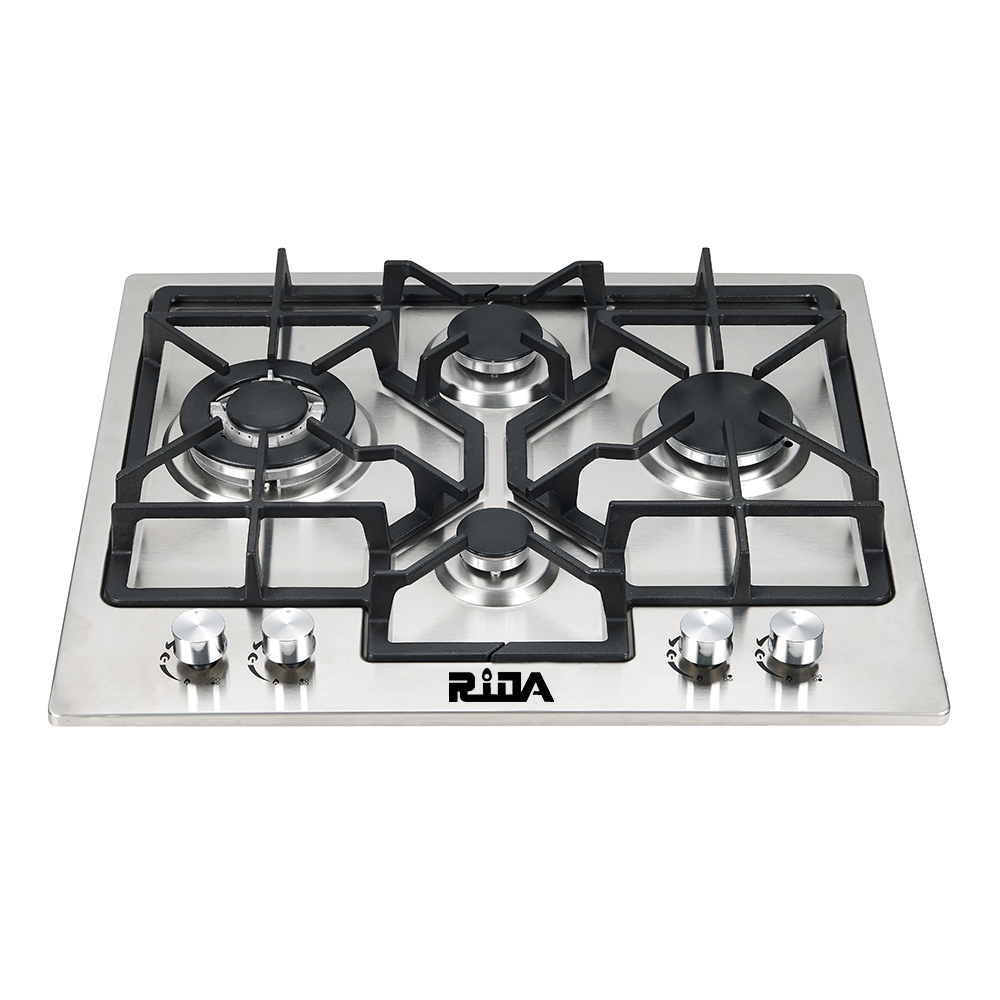
Selecting kitchen fixtures based on empirical performance data leads to better long-term investments. As engineers, we look at the objective, functional benefits of integrating this specific technology into your culinary space.
Thermal conductivity is critical when executing complex recipes. Standard budget cooktops often push heat directly to the center of a pan or exclusively to the outer edges. This creates frustrating hot spots. To combat this, premium Italian components feature precisely angled flame ports. These tiny holes force the flame to spread uniformly across the entire base of your pots. Whether tempering chocolate or searing meat, this uniform thermal blanket is absolutely essential.
Safety in modern gas appliances must rely on automated physical mechanisms rather than constant user vigilance. Authentic Italian systems come equipped with a Flame Failure Device. This setup utilizes a highly responsive Spanish Orkli thermocouple.
This heat sensor sits directly next to the flame ring. While the fire burns, ambient heat generates a tiny electrical millivolt current. This current holds an internal magnetic gas valve open. If a boiling pot of pasta water overflows and extinguishes the flame, the sensor cools down within seconds. The electrical current drops, the magnetic valve snaps shut, and the gas supply is physically severed. This brilliant mechanism prevents the silent accumulation of unburned gas.
Appliance efficiency is measured by how effectively fuel is converted into usable cooking heat. Because the aerodynamic structure achieves near-perfect combustion, your food reaches target temperatures noticeably faster. For instance, a high-quality built-in gas stove equipped with these components often features a powerful 3.3kW triple-ring wok burner. It pairs with 1.75kW semi-rapid burners and a 1.0kW auxiliary burner. This specific calibration ensures you use significantly less gas to bring a large pot of water to a rolling boil.
To make a truly informed purchasing decision, it helps to weigh premium Italian engineering against generic, mass-produced parts.
Feature | Premium Sabaf Components | Standard Generic Burners |
|---|---|---|
Material Quality | Forged brass and high-density aluminum alloys | Stamped steel or basic cast iron |
Flame Consistency | Sharp blue flame, uniform heat distribution | Yellow or orange tips, prone to hot spots |
Valve Control | Linear, precise thermal management | Jerky high-to-low transition |
Safety Mechanism | Standard fast-acting Flame Failure Device | Often absent or uses slow-reacting sensors |
Lifespan | 10+ years without thermal deformation | Prone to rust and warping within 2 to 3 years |
Generic cooktops often utilize thinner, lower-cost metals. Unfortunately, these materials are highly susceptible to rust and thermal warping after just a few years of heavy use. Once a base warps, fuel flow becomes erratic. Furthermore, the heavy-duty aluminum and solid brass alloys used in premium European components actively resist this degradation. They maintain their original shape and efficiency for over a decade.
Mastering a recipe requires precise thermal management. Many standard cooktops suffer from a rigid high-to-low limitation. When you turn the control knob, the transition between a roaring boil and a gentle simmer is unpredictable. Premium machined valves operate with exceptionally tight tolerances. This grants the home chef granular control over the flame size, effectively eliminating guesswork.
According to recent market analysis in the home appliance sector, there is a pronounced shift in consumer purchasing behavior. Homeowners are moving toward energy-efficient and component-driven kitchen upgrades. As utility costs fluctuate globally, consumers are no longer satisfied with entry-level stoves that waste fuel through incomplete combustion. Instead, the industry is witnessing a massive surge in demand for precision-engineered internal parts.
This trend highlights a growing awareness that the hidden mechanics of a cooktop are critical. The valves, injectors, and flame rings matter far more to long-term satisfaction and environmental sustainability than superficial exterior designs. Furthermore, modern kitchen renovations increasingly prioritize smart integration and modular repairs. Buying appliances with standardized, high-quality internal parts ensures easier maintenance and a longer product lifecycle.
High-performance internal mechanics require an equally robust exterior housing to support them. While tempered glass has surged in popularity for its reflective appearance, pairing Italian engineering with a stainless steel gas hob remains the absolute optimal choice for serious culinary environments.
From a strict material science perspective, austenitic stainless steel, specifically commercial 304 grade, is entirely non-porous. It absolutely will not absorb liquids, lingering odors, or harmful bacteria. Its high chromium content creates an invisible oxide layer on the surface. This makes it incredibly resistant to rust and corrosion caused by highly acidic food spills like tomato sauce or vinegar.
Tempered glass surfaces offer a highly contemporary look. However, glass is inherently brittle under localized impact and extreme thermal shock. If a heavy cast-iron soup pot slips from your grip, a glass surface risks catastrophic shattering. Steel offers absolute structural resilience. When paired with heavy cast iron pan supports and metal knobs, it provides an unbreakable foundation.
Selecting the correct appliance size involves balancing available countertop real estate with your daily meal preparation requirements. For the vast majority of modern households, a 4 burner hob represents the ultimate ergonomic configuration.
A compact two-ring setup is often too restrictive for preparing multi-component family meals. Conversely, a massive six-ring unit demands a sprawling kitchen island and highly specialized overhead ventilation. The four-ring configuration provides ample surface area. You can simultaneously boil pasta, sear a protein, simmer a reduction sauce, and warm a vegetable side dish.
By consolidating four distinct cooking zones, this specific layout maximizes your culinary capacity while preserving valuable countertop prep space. A typical premium 4-ring unit features a panel size of 590mm by 510mm. It requires a standard cut-out size of approximately 555mm by 475mm. This fits comfortably into standard kitchen cabinets, making it an incredibly easy upgrade for existing layouts without requiring expensive remodeling work.
Beyond internal mechanics and surface material, the physical format of the appliance heavily dictates kitchen ergonomics.
A built-in gas stove is a specialized appliance designed to drop directly into a custom-cut cavity on your countertop. Unlike a bulky free-standing cooker, an integrated unit sits flush with the counter surface. The primary advantage of choosing a flush-mounted unit is the complete elimination of annoying gaps. Free-standing cookers inevitably leave small crevices between the appliance and adjacent countertops. Over time, crumbs and grease accumulate in these hard-to-reach zones. An integrated unit seals securely to the countertop. Users can wipe spills away effortlessly with a single swipe of a sponge.
Selecting a premium cooking appliance requires a systematic approach. Transitioning to a high-performance system involves evaluating technical specifications, spatial parameters, and your daily household utility. Here is a practical engineer's checklist for making the right choice.
The transition requires precise cabinetry modification. You absolutely must measure the exact dimensions of your available counter space. There are two distinct measurements to consider carefully. First, the panel dimension is the total surface area the metal top will occupy visually. Second, the cut-out dimension is the exact size of the physical hole required in the countertop. Standard building codes also recommend maintaining a minimum vertical clearance of 650mm between the top of the grates and the range hood.
The appliance market is saturated with generic replicas. These knock-offs mimic the visual appearance of premium parts without delivering the associated thermal efficiency. To verify authenticity, closely inspect the caps and bases. Genuine components often feature specific branding or patent numbers stamped directly into the metal alloy. Ensure the unit features reliable AC 110V-240V pulse ignition for instant lighting.
Gas appliances are meticulously calibrated at the factory to operate on specific fuel pressures. You must identify whether your residence utilizes municipal piped Natural Gas or bottled Liquefied Petroleum Gas. Natural Gas operates at a lower pressure, typically 2000Pa. LPG operates at a higher pressure, around 2800Pa. The tiny injector nozzles hidden inside the bases must be sized correctly. Most premium cooktops include interchangeable brass conversion kits. However, a licensed gas fitter must perform this delicate conversion during installation.
Investing in a highly engineered cooking surface is one of the most impactful upgrades you can make to improve overall kitchen safety and culinary precision. The renowned Italian engineering behind these systems delivers the exact thermal control required for better cooking results. It completely eliminates the daily frustration of uneven heat.
By pairing these advanced internal mechanics with a heavy-duty, 304-grade stainless steel housing, you guarantee long-lasting durability. Whether you are simmering a delicate sauce or executing a high-heat stir-fry, upgrading to a reliable, flush-mounted configuration fundamentally transforms your daily meal preparation. It turns a tedious chore into a highly enjoyable, professional-grade experience.
Ready to elevate your kitchen with professional-grade engineering? Explore the full range of premium cooking appliances and find the perfect match for your culinary needs at Ridax Cooker today.
Yes, based on empirical thermal efficiency data. Premium components utilize a highly engineered aerodynamic design that optimizes the Venturi effect. This precise calibration results in a pure, sharp blue flame, indicating complete combustion. Standard budget options often suffer from poor air mixing. This results in lazy yellow flames that waste fuel and leave stubborn black soot on your cookware.
Yes, but not simultaneously, and absolutely not without a mechanical adjustment. Authentic systems are designed to be dual-fuel compatible out of the box. Because cylinder gas and piped municipal gas operate at significantly different pressure levels, the appliance requires specific injector nozzles for each distinct fuel type. A licensed gas technician must physically swap these nozzles and adjust the minimum bypass screw on the control valves.
Not at all, provided you use the correct maintenance techniques. High-grade steel does not absorb liquids, grease, or food odors. To maintain its factory-fresh finish, wait for the surface to cool completely after cooking. Use a soft microfiber cloth dampened with warm water and a mild dish detergent to gently wipe away spills. Always wipe in the direction of the metal's natural grain to prevent micro-scratches.
Under normal domestic usage conditions and with a routine maintenance schedule, these components are engineered to last well over a decade. This impressive longevity is directly attributed to their metallurgical composition. The bases are typically die-cast from high-density, heat-resistant aluminum, while the top caps are forged from solid brass or coated in a thick matte enamel.
An uneven or yellow flame usually indicates an incorrect air-to-gas ratio or a physical blockage. First, ensure the burner cap is seated perfectly flat on the base. If the cap is slightly misaligned, the gas flow will be disrupted. Second, check the tiny flame ports for spilled food or grease buildup. Clean them carefully with a stiff brush or a pin. If the flame remains yellow, the internal air shutter may need adjustment by a qualified technician to allow more primary air into the Venturi tube.
Continuous clicking usually points to an issue with the ignition mechanism or the flame sensor. When you push and turn the knob, the AC pulse ignition sparks to light the gas. Once lit, the thermocouple must sense the heat to keep the gas valve open and signal the igniter to stop sparking. If the burner cap is wet from cleaning, or if grease is coating the ignition pin, it may fail to detect the flame properly. Thoroughly drying and gently cleaning the ignition pin and thermocouple usually resolves this annoying issue immediately.


