

close
Choose Your Site
Global
Social Media
Views: 0 Author: Site Editor Publish Time: 2026-10-05 Origin: Site


Ever end up with a soggy, uninspiring stir-fry at home? You toss your fresh vegetables into the pan, only to watch them simmer sadly in their own juices. The culprit is rarely your recipe. Standard residential stoves simply lack the intense, recovering heat needed for authentic Asian cuisine. A specialized wok burner solves this frustrating issue instantly. In this comprehensive guide, we will dive into the exact heat metrics these appliances deliver. We will also help you choose the right equipment to transform your daily meal prep from a chore into a professional culinary experience.
Measured Heat Output: A specialized high-heat gas hob typically delivers between 12,000 and 20,000 BTUs, ranging from 3.5kW to 6.0kW. This offers significantly more thermal energy than standard 7,000 BTU burners.
The Physics of Wok Hei: Intense, sustained high heat is mathematically necessary to trigger the Maillard reaction rapidly. This creates the signature smoky flavor of authentic Chinese cuisine without overcooking the ingredients.
Structural Design: Raw power is insufficient without proper distribution. Multi-ring flame designs are engineered specifically to wrap heat around the curved base of traditional cookware.
Kitchen Upgrades: Installing a premium built-in unit improves overall kitchen efficiency, benefiting everyday tasks from rapid boiling to high-temperature searing.
To fully grasp the specific thermal output of this equipment, we must first examine its structural engineering. A high-capacity burner is not merely a larger version of a standard kitchen stove. It is a purpose-built appliance explicitly designed to manage and direct high volumes of combustible gas with absolute precision.
The primary distinction between a standard cooktop and a specialized setup lies in flame architecture and heat concentration. Standard kitchen burners are optimized for flat-bottomed pans. They feature a single, relatively small flame ring that directs heat straight upward. Consequently, when a round-bottomed pan is placed on a standard grate, the heat concentrates on a single tiny point at the very bottom. This leads directly to uneven cooking and severe hot spots.
In contrast, a specialized configuration utilizes a wider, multi-tiered flame design. This unique structure allows the flames to spread outward and upward. The fire physically cradles the curved bottom of the cookware, distributing thermal energy evenly across the sloped sides.
Feature | Standard Gas Burner | Specialized Burner Setup |
|---|---|---|
Flame Rings | Single ring | Dual or triple concentric rings |
Heat Distribution | Focused strictly at the center | Wraps around the curved sides |
Optimal Cookware | Flat-bottomed skillets, saucepans | Round-bottomed pans, large stockpots |
Thermal Output | Low to moderate | High to very high |
A true heavy-duty burner relies on specific anatomical components to function safely at elevated temperatures. The burner caps are typically constructed from heavy-duty brass or specialized metal alloys. As engineers, we look for these robust materials because they boast incredibly high melting points. They offer superior resistance to thermal deformation over years of daily, rigorous use.
Furthermore, these burners are paired with custom stands or trivets. These supports are meticulously designed to stabilize a round-bottomed pan, ensuring it sits at the precise distance from the flame. This optimal spacing maximizes heat transfer while allowing sufficient oxygen flow for complete, clean gas combustion. The targeted gas flow mechanisms within these units also allow for rapid temperature adjustments. This gives the cook immediate, tactile control over the thermal environment.
When evaluating cooking equipment, heat output is measured objectively using British Thermal Units or Kilowatts. One BTU represents the amount of heat required to raise the temperature of one pound of water by one degree Fahrenheit. Understanding these metrics is crucial for setting realistic culinary expectations before you start renovating your kitchen.
Most residential kitchen stoves are equipped with burners that output between 5,000 and 9,000 BTUs, which translates to roughly 1.5kW to 2.6kW. While perfectly sufficient for simmering delicate sauces or frying eggs, this output drops rapidly when cold, moisture-rich ingredients are added to a pan. The heat recovery is too slow, instantly killing the sear.
Specifically, a residential high-output hob is engineered to deliver between 12,000 and 20,000 BTUs, reaching up to 6.0kW of power. This elevated output provides the necessary thermal mass to maintain blistering temperatures even when large quantities of raw meat and vegetables are introduced.
Looking at recent industry trends, market analysts note a definitive shift in kitchen renovations. Homeowners are no longer satisfied with basic, builder-grade stoves. Instead, there is a surging demand for professional-style ventilation and high-BTU gas cooktops. Driven by a growing interest in global cuisines and the desire to replicate restaurant-quality searing at home, consumers actively seek appliances that bridge the gap between commercial power and residential safety. The 15,000 to 20,000 BTU range represents that perfect, safe sweet spot for modern home kitchens.
Focusing solely on raw BTU numbers can be highly misleading. If an appliance delivers 18,000 BTUs focused entirely on a two-inch diameter spot, it will simply scorch the food and permanently warp the metal pan. Effective culinary technique relies heavily on temperature gradients.
The multi-ring design of a premium burner ensures that heat travels up the sloped sides of the pan. This creates distinct thermal zones. You get a searingly hot zone at the bottom for blistering raw ingredients, alongside a slightly cooler zone along the upper edges. Here, cooked food can be pushed up to stay warm without burning. This dynamic heat distribution is exactly what separates specialized engineering from a simple, high-output camping stove.
The requirement for high BTU output in Asian cuisine is not just a matter of tradition. It is rooted deeply in food science. The specific culinary results achieved in professional kitchens are directly tied to rapid thermal dynamics.
Wok Hei translates poetically as the breath of the wok. Scientifically, it is the complex, smoky flavor profile characteristic of premium stir-fries. This phenomenon is the result of the Maillard reaction occurring at accelerated rates due to extreme heat.
When cooking on a proper chinese wok stove, the surface temperature of the carbon steel frequently exceeds 400 degrees Fahrenheit. At these temperatures, the moisture on the surface of the meat vaporizes almost instantly with a loud hiss. Micro-droplets of cooking oil catch the rising heat and partially combust in the air. This reaction creates that signature smoky aroma that coats the food. Without the intense, recovering heat of a high-output flame, ingredients will release their internal moisture slowly, causing the food to boil in its own liquids.
Another practical benefit of immense thermal output is time efficiency. A proper setup drastically reduces cooking times. For instance, vegetables tossed for two minutes at 450 degrees Fahrenheit will retain their crisp cellular structure and vibrant color. Conversely, those same vegetables cooked for ten minutes at a much lower temperature will become limp, gray, and nutritionally degraded. The intense heat ensures the exterior is cooked perfectly while the interior remains fresh and tender.
A common debate in modern kitchen design is whether induction technology can fully replace gas for high-heat cooking. While induction is undeniably fast and highly energy-efficient, there are distinct physical limitations when it comes to traditional stir-frying.
Induction hobs work through electromagnetic fields that directly heat the ferromagnetic metal of the pan. In terms of raw speed, a high-end induction element can boil a pot of water faster than a gas flame. However, induction requires physical, flat contact between the glass surface and the cookware to function effectively.
Traditional round-bottom pans have minimal contact area with a flat glass surface, rendering standard induction highly ineffective for this style of cooking. Even if a flat-bottomed pan is utilized, an induction element only heats that flat base. The sloped sides of the pan remain relatively cold, effectively destroying the necessary temperature gradients.
A gas flame remains the superior choice for this specific culinary technique. The fire physically escapes the base and wraps around the curvature of the pan, heating the sides. In addition, the physical act of tossing—lifting the pan off the heat source to flip the ingredients—breaks the electromagnetic connection on an induction stove, causing it to shut off temporarily. A gas flame continues to provide ambient heat even when the pan is lifted above the grate.
Investing in specialized kitchen equipment yields daily benefits that extend far beyond a single style of cooking. Upgrading your cooking surface fundamentally alters how you interact with your culinary environment.
A high-capacity burner is an incredibly versatile tool. The same 18,000 BTU output required for a perfect stir-fry is equally effective for rapidly boiling large stockpots of water for pasta. This significantly reduces your prep time on busy weeknights. It is also ideal for deep-frying. The rapid thermal recovery rate ensures the oil returns to the target temperature quickly after cold food is submerged, preventing greasy results. Furthermore, it provides the intense, dry heat necessary to properly sear thick cuts of steak in a heavy cast-iron skillet.
Beyond raw functionality, modern appliance design prioritizes architectural integration. Transitioning from a bulky, freestanding stove range to a sleek built-in gas hob offers a refined, minimalist aesthetic. These units are installed directly into the countertop. This flush integration eliminates the awkward, crumb-catching gaps between standard stoves and cabinetry. It not only saves visual space but also makes routine kitchen cleaning significantly more efficient.
When transitioning from standard residential cooking to high-heat culinary techniques, selecting the correct appliance requires careful evaluation of its engineering. Not all stoves marketed as having a high power burner deliver the actual performance required for authentic results. Here are the critical specifications to evaluate.
The defining characteristic of a professional-grade unit is its flame architecture. Standard burners utilize a single ring of ports, concentrating heat directly in the center. To achieve proper heat wrapping, look for dual-ring or triple-ring flame technology. These burners feature concentric circles of flame that can often be controlled independently.
Inner ring control allows for a low, concentrated flame ideal for simmering sauces. Activating the outer rings ignites the wider perimeter, wrapping intense heat around the curvature of the pan. Furthermore, always check the material of the burner caps. Premium models utilize heavy brass burner caps rather than standard aluminum, ensuring longevity under extreme thermal stress.
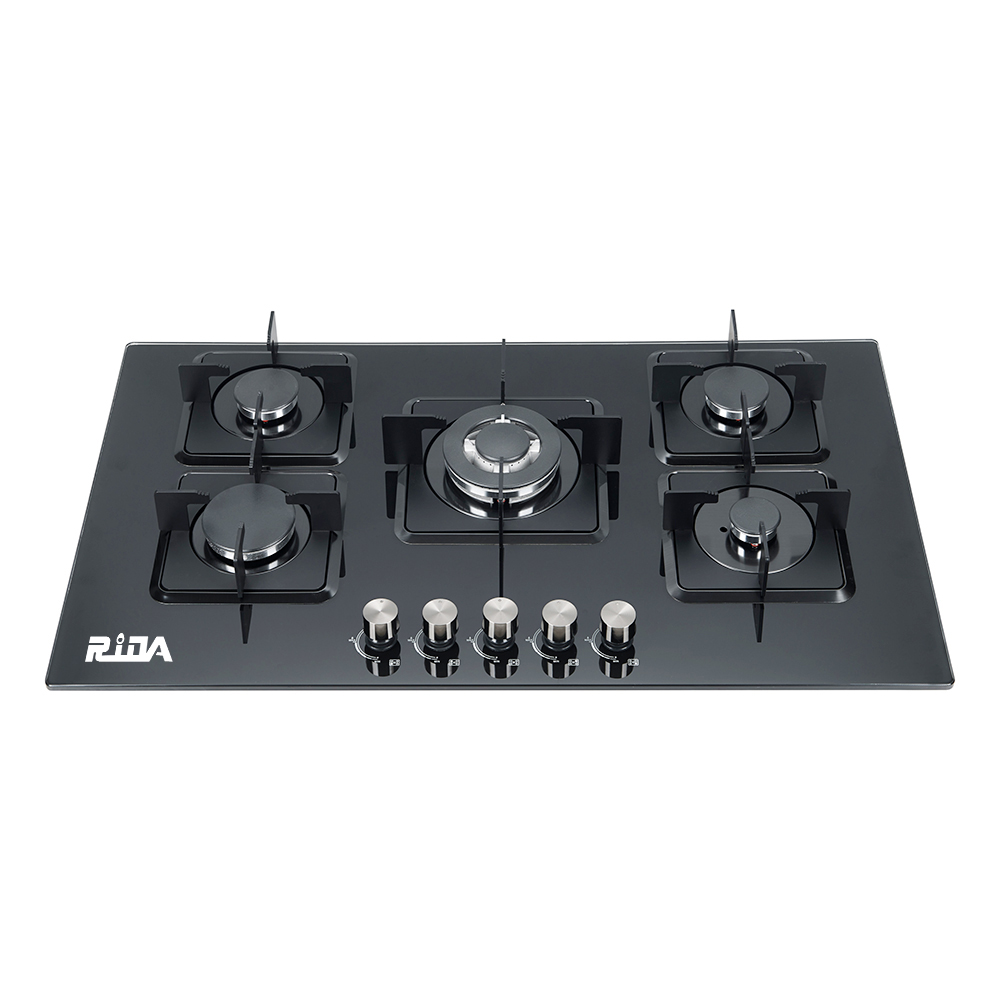
Think about how you orchestrate a meal. For avid home chefs, a 5-burner layout is highly recommended. These configurations typically place a massive central burner right in the middle of the appliance, flanked by four smaller ones. This layout provides maximum elbow room, allowing you to center an oversized pan without crowding adjacent pots.
Surface material is equally important. An 8mm thick black tempered glass surface offers a sleek, highly modern finish that is incredibly easy to wipe down. Alternatively, high-grade stainless steel provides industrial-level durability for heavy-impact environments.
The physical stability of your cookware is just as important as the heat beneath it. Authentic stir-frying involves dynamic movement—constant tossing, flipping, and heavy scraping. A lightweight or poorly designed trivet will shift, creating a severe safety hazard when working with hot oil and an open flame.
Prioritize heavy-duty cast iron pan supports over enameled steel alternatives. Cast iron absorbs and retains heat exceptionally well, helping to stabilize the temperature around the base of the pan. Its naturally porous texture provides superior grip against smooth steel, preventing accidental slipping.
High-heat cooking inherently involves higher gas flow rates. Therefore, advanced safety mechanisms are non-negotiable for indoor residential kitchens. The most critical feature to verify is the presence of a Flame Failure Device, typically operated via a thermocouple.
A thermocouple is a small thermoelectric sensor positioned directly next to the burner cap. When the flame is lit, the heat generates a tiny electrical current that holds the main gas valve open. If the flame is accidentally extinguished by a sudden draft or a liquid boil-over, the thermocouple rapidly cools down. The electrical current drops, and a spring-loaded valve snaps shut, cutting off the gas supply within seconds. This automated mechanical safety protocol ensures unburned gas cannot leak into your home.
Purchasing the appliance is only half the equation. Proper installation and environmental management are critical for extracting maximum performance from a high-output system.
The vaporization of cooking oils generates significant amounts of smoke, steam, and airborne grease. A standard recirculating hood will simply not suffice. You must pair your new hob with a powerful external-venting range hood. A general engineering rule of thumb for gas cooking is that you need 100 Cubic Feet per Minute of ventilation for every 10,000 BTUs of total burner output. If your central burner outputs 18,000 BTUs, a high-capacity range hood is highly recommended to maintain indoor air quality.
Intense heat requires an adequate and uninterrupted fuel supply. If you are upgrading from a standard cooktop, your existing gas line must be evaluated by a certified technician. The internal diameter of the gas supply line must be wide enough to deliver the required volume without pressure drops. Furthermore, the gas regulator must be properly calibrated for the specific type of gas you are using, whether that is natural gas or liquid propane, to ensure optimal combustion and prevent sooty, yellow flames.
Achieving restaurant-quality meals at home ultimately comes down to having the right tools. A specialized gas hob delivers the intense, enveloping heat necessary to unlock authentic flavors and achieve perfect textures. By investing in a high-capacity burner, you are not just improving your stir-fries. You are expanding your culinary versatility, reducing prep times, and elevating the overall efficiency of your kitchen. Evaluate the materials, prioritize safety features like thermocouples, and choose the exact burner configuration that fits your workflow. Ready to transform your daily cooking into a truly professional experience? Explore premium, high-performance cooking solutions at Ridax Cooker to find the ideal built-in unit for your home.
Yes, you can use standard flat-bottomed frying pans, large skillets, and heavy stockpots on these specialized burners. The multi-ring flame design is highly versatile. However, you must exercise caution when using very small cookware, such as a tiny saucepan. Because the flame is designed to spread wide, operating it at maximum capacity beneath a small pan will cause the flames to lick up the exterior sides, wasting thermal energy and potentially melting the handle. Always match the flame diameter to the base of your cookware.
To achieve the rapid searing and smoky flavor associated with authentic Wok Hei, you should aim for a burner that delivers a minimum of 12,000 to 15,000 BTUs, which is approximately 3.5kW to 4.5kW. Standard residential burners usually max out around 7,000 to 9,000 BTUs. This is insufficient and results in boiling rather than frying. While commercial restaurants use burners exceeding 100,000 BTUs, the 15,000 to 20,000 BTU range is the optimal and safe threshold for residential kitchens.
A rapid burner is simply a large, high-output burner designed to boil water quickly, usually featuring a single wide flame ring. A wok burner, however, utilizes a multi-ring design to create distinct heat zones. This specialized engineering allows the flames to wrap around the curved sides of a pan, providing heat to both the bottom and the slopes simultaneously.
For the most authentic and efficient results, a traditional carbon steel pan is highly recommended. Carbon steel is highly responsive to temperature changes, allowing you to control the cooking process instantly. If your hob is equipped with a contoured cast iron wok ring or trivet, a round-bottom pan is ideal, as the trivet will hold it securely. If your grates are strictly flat, a flat-bottomed carbon steel pan will still perform beautifully, absorbing the intense heat efficiently while remaining stable.
Brass components naturally patina over time due to heat exposure. To maintain their performance, remove the caps once they are completely cool and wash them in warm, soapy water. Avoid highly abrasive scouring pads that can scratch the metal. Ensure all burner ports are completely dry and free of debris before reassembling to guarantee a clean, even flame.
Absolutely. These appliances are specifically engineered for indoor residential use and are equipped with strict safety mechanisms. The most important is the thermocouple flame failure device that automatically shuts off the gas if the flame extinguishes. However, their safety and performance rely heavily on proper installation by a certified gas technician, as well as pairing them with an adequately sized, externally vented range hood to safely extract smoke and heat.


