

close
Choose Your Site
Global
Social Media
Views: 0 Author: Site Editor Publish Time: 2026-10-19 Origin: Site


Does your busy kitchen stall at the stove during dinner rushes? Picture a chaotic holiday morning. Pots clatter constantly. Sauces bubble precariously close to each other. You have absolutely zero room to shuffle pans. Buying a stove purely for looks often causes this daily frustration. When appliance dimensions misalign with your household needs, meal prep slows down significantly.
As appliance engineers, we see this workflow bottleneck frequently. In this comprehensive guide, we decode exterior widths, evaluate interior capacities, and help you choose the perfect size to streamline your chaotic cooking schedules.
Standard Widths Dictate Workflow: While 30-inch models fit most standard kitchen cutouts, upgrading to wider models or optimizing with compact units provides the exact real estate your traffic demands.
Interior Capacity is Crucial: A standard residential oven offers around 5.0 cubic feet of space. Conversely, a specialized compact cavity serves as a highly efficient companion for rapid preheating.
Appliance Style Impacts Spatial Fit: Choosing the right structural design provides versatile dimensions and straightforward installation. This makes rapid kitchen upgrades seamless.
Measure Clearances Accurately: Proper walkway clearance, door swing paths, and overhead ventilation are equally as important as the physical footprint of the appliance itself.
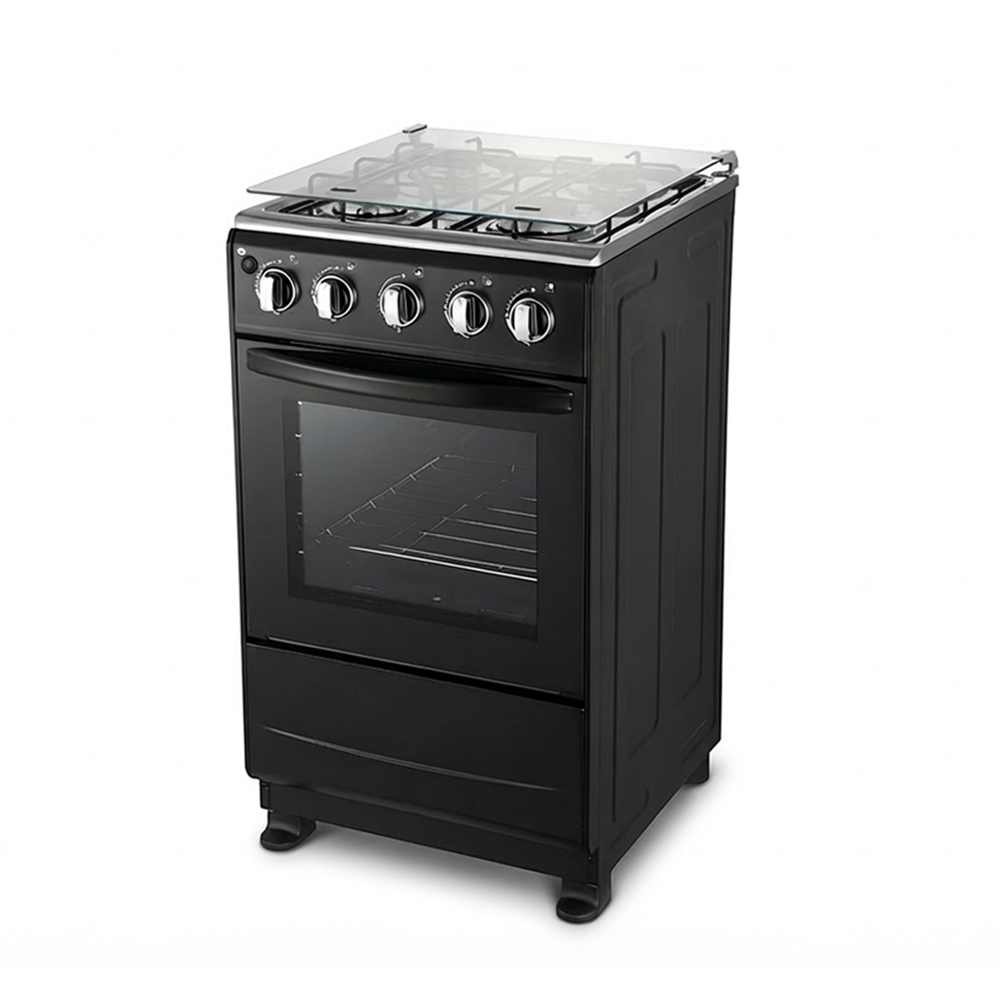
Understanding exterior appliance dimensions is the foundational step in optimizing a high-traffic culinary space. The physical bulk of your stove directly impacts available counter space, cabinet configuration, and overall cooking efficiency. Selecting the right footprint ensures you never bump elbows while trying to sear a steak.
The 30-inch model remains the undisputed industry standard for residential homes. Typically measuring 30 inches wide and 36 inches high, it aligns flush with standard countertops. The depth runs 25 to 27 inches. Engineers design this size to slide into standard cabinet cutouts without requiring expensive custom carpentry.
For medium-sized kitchens, this dimension balances cooking capacity with spatial efficiency. These units usually feature four to five burners. If your kitchen layout cannot be altered structurally, maximizing the efficiency of a 30-inch model is the most logical decision.
For households that cook daily or entertain frequently, upgrading to a 36-inch range fundamentally transforms the cooking experience. This seemingly minor six-inch width increase allows for true multitasking.
A 36-inch stovetop comfortably accommodates six independent burners. Consequently, large stockpots and wide skillets do not crowd each other. This prevents the common bottleneck of shifting hot cookware around during complex meal preparations. However, upgrading from a 30-inch to a 36-inch model requires physical remodeling, including cutting back countertops.
Not every high-traffic kitchen has unlimited square footage. Specifically, a 20-inch free-standing model provides an incredibly efficient footprint for urban apartments, accessory dwelling units, or secondary prep kitchens. These units maintain high thermal output while saving critical floor space. They deliver robust performance without dominating the room.
Recent market analyses reveal a definitive shift in how homeowners approach their cooking spaces. Modern households prioritize dynamic workflow over purely aesthetic choices. The demand for highly specialized cooking zones has skyrocketed.
Buyers actively seek versatile burner configurations and highly efficient compact ovens. They want appliances that handle daily high-volume meal preparation without acting as a physical bottleneck. Furthermore, the integration of manual ignition systems in modern compact models ensures absolute reliability during heavy usage periods. This specific feature remains highly valued by seasoned cooks who demand uninterrupted performance.
Exterior width dictates how the appliance fits into your cabinetry. In contrast, interior capacity determines what you can actually cook. Evaluating interior volume is just as critical as measuring the exterior footprint when selecting a reliable kitchen gas range for your home.
Manufacturers measure oven capacity differently depending on the region. In North America, cubic feet is the standard metric. Internationally, and in specialized compact appliances, liters dictate the measurement.
To convert the measurements objectively, one cubic foot equals approximately 28.3 liters. Therefore, a standard American 5.0 cubic foot oven is roughly 141 liters. Understanding this conversion is vital when comparing domestic ranges with specialized compact units.
A 55L oven translates to roughly 1.94 cubic feet. Standard residential metrics consider this a compact cavity. However, its smaller dimensions offer distinct thermodynamic advantages in a chaotic cooking environment.
Because the internal volume is significantly smaller, this size preheats in a fraction of the time it takes a standard 5.0 cubic foot model to reach 400 degrees Fahrenheit. This rapid heating curve saves both precious time and energy consumption. A 20-inch free-standing model equipped with manual ignition and a 55L capacity serves as a highly reliable workhorse. It proves exceptionally efficient for everyday tasks like baking a single sheet of cookies, roasting a quick tray of vegetables, or bubbling a standard casserole.
If your culinary style heavily involves roasting massive holiday turkeys or baking multiple sheets of delicate pastries simultaneously, a compact interior will inevitably cause workflow bottlenecks. For these heavy-duty tasks, a standard capacity of 5.0 cubic feet or larger is necessary. A larger interior ensures proper air circulation around oversized cookware. This remains a fundamental requirement for even heat distribution and safe food temperatures.
The structural design of the range affects both physical dimensions and the visual perception of space in your kitchen. The two most common configurations on the market are freestanding and slide-in models.
A freestanding gas range is engineered with finished side panels and a raised rear backguard. The oven controls are typically located on this backguard.
From a dimensional standpoint, these models are incredibly versatile. Their sides are fully finished. You can place them at the end of a cabinet run or let them stand alone if necessary. The raised backguard protects the wall behind the stove from grease splatters, eliminating the immediate need for a custom tile backsplash. For busy kitchens undergoing rapid upgrades, these units offer the easiest installation. They simply slide into a designated space without requiring precise countertop overlaps.
In contrast, slide-in ranges lack the rear backguard and feature unfinished sides. The controls sit on the front panel. The top edges of the stove are designed to slightly overlap the adjacent countertops.
This seamless design creates an integrated look that makes a kitchen feel larger. However, slide-in models require highly precise countertop dimensions. If the cutout is even a quarter-inch too wide, the overlap will not sit flush. This creates frustrating gaps where food debris easily accumulates.
To simplify your selection process, our engineering team compiled this direct comparison matrix. Use this standard to match appliance dimensions with your actual cooking volume.
Appliance Width | Typical Oven Capacity | Ideal Kitchen Scenario | Key Engineering Advantage |
|---|---|---|---|
20-Inch Compact | 55L | Urban apartments, prep kitchens | Ultra-fast preheating, saves maximum floor space |
30-Inch Standard | 5.0 Cubic Feet | Standard residential homes | Fits universal cutouts, requires no remodeling |
36-Inch Wide | 5.5 - 6.0 Cubic Feet | Frequent entertainers, large families | True multitasking with 6 independent burners |
Selecting the right appliance requires aligning the physical specifications of the stove with your daily habits. Overbuying leads to wasted floor space. Underbuying creates daily friction.
If you operate in a tight galley kitchen, a 20-inch model with a 55L capacity is your best asset. It delivers the necessary thermal output for daily meals without consuming your limited prep space. The manual ignition ensures mechanical reliability day after day.
If you dedicate your weekends to batch-cooking meals, interior width is your primary concern. You need a cavity wide enough to accommodate two standard half-sheet pans side-by-side. A standard 30-inch model with a 5.0 cubic foot capacity usually fulfills this demanding requirement perfectly.
Hosting dinner parties requires managing multiple dishes at varying temperatures simultaneously. For this demographic, investing in a wider gas cooker with oven is highly recommended. The expanded stovetop allows you to aggressively boil pasta water on a high-BTU burner while gently simmering a delicate sauce on a low-BTU burner. Your pots will never collide.
Accurate spatial planning is the most critical phase of the purchasing process. Relying on nominal measurements frequently results in installation failures. Appliance dimensions and cabinet cutouts require precise, objective verification.
To ensure a seamless installation, utilize a steel tape measure. Record dimensions down to the nearest sixteenth of an inch. Measure the cabinet cutout width at the front, middle, and rear of the opening. Cabinets can warp or shift over time. Next, measure the depth from the back wall to the front edge of the cabinet face. Finally, measure the height from the finished floor to the top of the countertop.
A common oversight in kitchen planning is evaluating the appliance strictly by its closed dimensions. The operational footprint includes the path of the door. When fully extended, a standard door drops down an additional 20 to 22 inches. You must calculate this protrusion into your kitchen walkway. An ergonomic design requires a minimum of 40 inches of clearance between the front of the closed unit and the opposing island.
The physical size of your cooking appliance directly dictates your ventilation requirements. As burner output and cooktop width increase, the volume of smoke and grease rises proportionally. The objective rule of thumb dictates that the range hood must be at least as wide as the cooking surface. For optimal capture efficiency, industry standards recommend a hood that is six inches wider than the range below it.
Even with careful measurement, certain structural nuances can derail an installation. Avoiding these common empirical errors saves time and capital.
Ignoring Handle Depth: Manufacturers typically list the depth of an appliance excluding the handles and knobs. However, robust handles can protrude an additional 2.5 to 3 inches into the kitchen space. In narrow galley kitchens, this unexpected protrusion disrupts the workflow triangle and catches on clothing. Always verify the total depth specification.
Disregarding Utility Placement: The back of a gas appliance is rarely perfectly flat. It features a recessed cavity designed to accommodate the gas shut-off valve and the electrical plug. If your kitchen utilities do not align with this specific recessed area, the stove will not sit flush against the wall. This pushes the entire unit further into the walkway.
Overbuying for the Space: Expanding the cooking zone inherently requires sacrificing base cabinets and countertop prep space. A high-powered stove is practically useless if you lack adequate landing zones on either side to place hot pans or prepare ingredients.
Finding the right dimensions optimizes your kitchen workflow. It transforms chaotic meal preps into streamlined culinary experiences. Success relies entirely on balancing your physical space with your daily cooking volume.
A standard 30-inch model works exceptionally well for most upgrades, providing solid performance without requiring a remodel. However, busy kitchens truly thrive with wider models for multitasking or highly efficient 20-inch compact units that allow for rapid preheating. Measure your space carefully, account for door swings, and ensure your ventilation matches your thermal output.
Ready to upgrade your kitchen workflow and eliminate daily cooking bottlenecks? Evaluate your spatial requirements and explore high-performance options at Ridax Cooker to find the exact dimensions, capacities, and specifications your busy kitchen demands.
Standard freestanding models are engineered to fit a universally accepted footprint. The width is nominally 30 inches, designed for a standard 30-inch cabinet cutout. The height is exactly 36 inches to the cooking surface, ensuring it aligns perfectly with standard kitchen countertops. The depth generally ranges from 25 to 27 inches, allowing the chassis to sit flush with standard base cabinets.
A 55L capacity translates to approximately 1.94 cubic feet of interior space. From a practical standpoint, it is highly efficient for a family's daily meals. You can easily bake a standard casserole, roast a chicken, or cook a single sheet pan of vegetables. Its primary advantage is rapid preheating and much lower energy consumption compared to standard models.
Spatial planning dictates that you must leave an absolute minimum of 40 inches of clearance between the front of your appliance and any opposing obstacles, such as a kitchen island. This specific measurement accounts for the 20 to 22 inches required for the door to fully extend downward, leaving adequate standing room for the user to safely retrieve heavy cookware.
Yes, upgrading from a 30-inch to a 36-inch model is entirely possible, but it is not a direct swap. It requires structural kitchen remodeling. You will need to cut back your existing countertops by six inches and permanently alter the adjacent base cabinets. Additionally, the increased thermal output usually necessitates upgrading your overhead ventilation hood.
When you fully open the oven door, the total depth of the appliance extends to approximately 45 to 48 inches from the back wall. You must factor this operational footprint into your kitchen design to ensure safe passage and ergonomic workflow during busy cooking sessions.
A 20-inch model is ideal if you operate in a galley kitchen, an accessory dwelling unit, or if you prioritize countertop prep space over massive burner capacity. These units often feature manual ignition and a 55L oven, providing robust mechanical reliability and extremely fast preheat times for daily, practical cooking tasks.


