

close
Choose Your Site
Global
Social Media
Views: 0 Author: Site Editor Publish Time: 2026-08-16 Origin: Site


A common mistake when buying kitchen equipment is assuming a higher BTU rating automatically means faster cooking. People chase the highest numbers on the specification sheet. They expect rapid boils, instant sears, and immediate performance upgrades. But raw energy output is only half the equation. The physical geometry of the burner matters just as much. We often see a severe mismatch between burner diameter, cookware size, and heat output on the line. When these elements misalign, you waste fuel and get uneven heat distribution. Food scorches in the center while the edges stay raw. Pumping massive amounts of gas through a burner does not speed up cooking if the heat misses the pan entirely. To optimize your kitchen workflow, you must evaluate burner geometry alongside raw power specifications before upgrading your equipment.
BTUs Require the Right Geometry: Maximum heat output only translates to faster cooking when the burner diameter matches the cookware base, preventing heat from escaping up the sides.
The Pan-to-Burner Ratio: A burner flame ring that is slightly smaller than the pan base delivers the most efficient thermal transfer, reducing preheat times and ensuring even cooking.
Fuel Efficiency Impact: Operating mismatched burners can effectively double fuel consumption; optimizing the pan-to-burner match is critical for both speed and energy conservation.
Design Matters as Much as Size: Dual-ring and stacked burner designs offer the flexibility to adjust the effective heating diameter, maximizing efficiency across various pan sizes.
Infrastructure Realities: Upgrading to high-diameter, high-BTU burners necessitates strict evaluation of existing gas line capacities and ventilation systems.
Understanding the relationship between raw energy output and effective heat transfer is the first step in mastering gas equipment. A BTU measures the amount of heat required to raise the temperature of one pound of water by one degree Fahrenheit. While a high BTU rating indicates the potential for massive heat generation, it does not guarantee that the heat will successfully penetrate your cookware. Effective heat transfer relies entirely on conductive surface area. If the flame does not physically interact with the bottom of the pan, the energy simply dissipates into the surrounding air.
Consider a scenario where you place a small, 6-inch saucepan on a massive 22,000 BTU burner with a wide diameter. Despite the immense power, this setup will boil water slower than placing the same saucepan on a 12,000 BTU burner with a narrow diameter. The wide burner directs the majority of its thermal energy past the outer edges of the small pot. The gas velocity pushes the flame envelope outward, bypassing the conductive base entirely. The only heat transferring into the pot is radiant heat, which is highly inefficient. Conversely, the narrower burner concentrates its lower total energy directly into the metal base, maximizing thermal absorption and accelerating the boiling process.
The thermal efficiency difference between running a small-diameter burner at a high burn rate versus a large-diameter burner at a low burn rate is substantial. A large burner turned down low spreads a weak flame over a wide area. This weak, dispersed flame struggles to penetrate thick cookware like cast iron or multi-clad stainless steel. A smaller burner operating at full capacity drives concentrated, high-velocity heat directly into the target zone. Matching the flame footprint to the pan size ensures that every unit of gas consumed contributes directly to raising the internal temperature of the food.
Gas flames possess unique physical properties that dictate how they interact with cookware. As gas combusts and rises, the flames naturally flare outward, interacting with ambient air currents and the physical barrier of the pan. This outward spread means the effective heating diameter is always slightly larger than the physical brass or aluminum burner cap. Anticipating this flame spread is necessary for achieving high thermal efficiency.
The technical success criteria for maximum thermal efficiency is straightforward: the flame must make direct, sustained contact with the conductive flat base of the pan without licking up the vertical sides. When flames travel up the exterior walls of a pot, they are no longer heating the liquid or food inside. Instead, they are heating the ambient room air and the pot handles. By keeping the flame strictly confined to the horizontal base, you force the thermal energy to travel upward through the metal layers, directly into the ingredients, drastically reducing cooking times.
To verify your thermal efficiency on the line, perform these visual checks:
Turn the burner to its maximum setting with your most frequently used pan centered on the grate.
Inspect the perimeter of the pan at eye level. The flame tips should terminate at least one inch inside the outer edge of the pan base.
Check for yellow tipping on the flames. If the flames are yellow and wrapping up the sides, the burner is too wide or the air-to-gas mixture is incorrect.
Place your hand near the handle. If the handle becomes uncomfortably hot within two minutes, the burner diameter is too large for that specific vessel.
Using a narrow burner for a wide pan creates immediate performance bottlenecks. Placing a 12-inch cast-iron skillet on a 3-inch burner forces the heat into a highly concentrated center zone. Cast iron and stainless steel are relatively poor thermal conductors compared to copper or aluminum. When heat is applied only to the center, the metal struggles to push that thermal energy outward to the edges of the pan.
This localized heating causes a severe delay in overall cooking speed. You must wait extended periods for the pan's perimeter to reach a usable temperature. If food is added too early, the ingredients in the center will sear aggressively while the ingredients on the edges will merely steam or remain raw. This thermal bottleneck forces you to constantly stir and rotate food, increasing active labor and extending the total time required to complete a dish.
The negative impact on food quality is highly predictable. The concentrated center heat frequently causes scorching, ruining delicate sauces and burning proteins. Meanwhile, the undercooked perimeter fails to achieve proper caramelization or Maillard browning. A burner that is too small fundamentally undermines the purpose of using wide cookware, turning a large cooking surface into a frustratingly small, unpredictable hot spot.
When the burner diameter exceeds the pan base, the physics of heat loss take over. Flames that extend beyond the edge of the cookware dump their thermal energy directly into the kitchen environment. The pan acts as a physical block, forcing the rising heat to divert outward rather than absorbing it. This dynamic creates a scenario where the stove is operating at maximum capacity, yet the food receives only a fraction of the generated energy.
This mismatch introduces significant safety and efficiency risks. The wasted ambient heat drastically increases the temperature of the kitchen, forcing exhaust hoods and makeup air systems to work harder to maintain a comfortable environment. Furthermore, flames licking up the sides of a pot will quickly superheat metal handles or melt synthetic grips, creating severe burn hazards. Cooking speed diminishes because the conductive base is not receiving the concentrated energy required to maintain high internal temperatures.
The fuel waste metrics associated with oversized burners are alarming. Heat escaping up the sides of a mismatched pan can effectively double fuel consumption. You are paying for the gas required to run a 20,000 BTU burner, but only utilizing 10,000 BTUs of actual cooking power. Correcting this mismatch by using an appropriately sized burner eliminates this waste, speeds up the cooking process, and drastically reduces utility consumption over time.
Achieving peak performance requires adhering to a specific industry-standard evaluation lens: the visible flame ring should cover approximately 75% to 85% of the pan's flat bottom. This ratio accounts for the natural outward flare of the gas flame as it hits the metal. By targeting this percentage, the heat spreads evenly across the entire base without spilling over the edges.
Burner Diameter vs. Pan Size Compatibility Guide
Burner Diameter (Approximate) | Ideal Pan Base Diameter | Primary Culinary Application |
|---|---|---|
3 to 4 inches | 5 to 7 inches | Small saucepans, melting butter, simmering delicate sauces |
5 to 6 inches | 8 to 10 inches | Medium skillets, everyday sautéing, boiling small pots of water |
7 to 9 inches | 11 to 14 inches | Large stockpots, wide searing pans, Dutch ovens |
Concentrated Wok Jet | 14+ inch Round Bottom | High-velocity stir-frying, rapid searing, deep frying |
This specific ratio ensures optimal heat spread across the entire base. When the flame hits the 80% mark, the thermal energy easily conducts outward to the remaining 20% of the pan edge, ensuring edge-to-edge consistency. This precise alignment results in faster preheating, rapid recovery times when cold food is added to the pan, and effortless temperature maintenance throughout the cooking cycle.
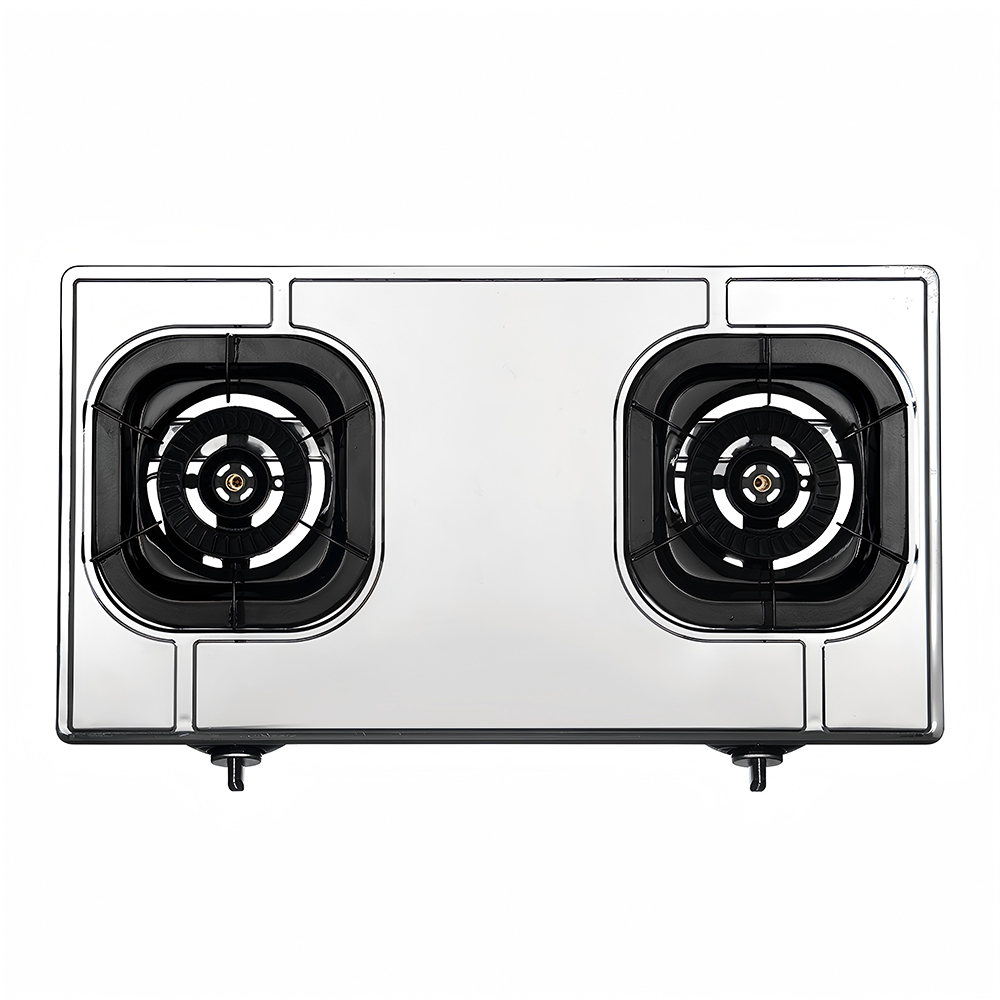
When assessing equipment, understanding the mechanical differences between burner types is essential. Single-ring burners feature a fixed diameter. They output gas through a single circular channel, meaning the flame footprint remains relatively constant regardless of how high or low you adjust the gas flow. While reliable and simple, single-ring designs force you to physically move pans to different burners to achieve optimal thermal efficiency.
Dual-ring or stacked burners provide a massive advantage in versatility. These designs feature an inner ring for low-heat simmering and a separate outer ring for high-heat applications. By utilizing independent gas valves, a fast cooking gas burner with a dual-ring configuration can adapt instantly. You can shut off the outer ring to gently simmer a small saucepan, or ignite both rings to blast a large stockpot with maximum BTUs. This adjustable diameter maximizes efficiency, speed, and fuel economy across a wide variety of pan sizes without requiring multiple dedicated burner sizes on the cooktop.
The configuration of the burner basin heavily influences oxygen flow and flame shape. Open burners sit inside a recessed bowl, allowing primary oxygen to mix with the gas below the cooking surface. This design creates a highly direct, vertical flame that aggressively targets the bottom of the pan. The vertical trajectory is exceptional for speed, rapid boiling, and wok cooking, as the heat is concentrated directly upward.
Sealed burners feature a cap that prevents spills from entering the internal gas components. Because the oxygen must mix above the cooktop surface, the flame is forced to splay outward horizontally from beneath the cap. While easier to clean, this outward splay requires wider pans to capture the heat efficiently. Using a small pan on a large sealed burner guarantees that the horizontal flames will bypass the base, resulting in sluggish cooking speeds and wasted energy.
The material composition of the burner cap dictates long-term durability and thermal retention. Aluminum caps are lightweight and cost-effective, but they are susceptible to warping and degradation when exposed to continuous, extreme heat. Over time, a warped aluminum cap disrupts the precise flow of gas, causing uneven flames, hot spots, and diminished cooking performance.
Commercial-grade stoves and premium residential units rely on solid brass burners. Brass possesses superior thermal mass and structural integrity. It maintains its exact shape under grueling high-heat conditions, ensuring that the gas ports remain perfectly aligned year after year. This consistent gas flow guarantees reliable flame geometry, which directly translates to long-term speed, efficiency, and predictable cooking results.
Burner Material Comparison
Material | Heat Tolerance | Durability | Best Application |
|---|---|---|---|
Aluminum | Moderate (Prone to warping at max BTUs) | Low to Medium | Light residential use, low-BTU simmer burners |
Solid Brass | Extreme (Maintains shape under heavy load) | High | High-output commercial cooking, heavy daily use |
Cast Iron | High (Excellent thermal mass) | High (Requires maintenance to prevent rust) | French tops, heavy grates, continuous heat zones |
Round-bottom woks require a completely different approach to burner geometry than flat-bottomed cookware. A wide, dispersed flame is entirely ineffective for traditional wok cooking. Woks rely on a distinct temperature gradient: a blistering hot center for rapid searing and cooler upper walls for resting ingredients. To achieve this, the burner must deliver a highly concentrated, vertical column of heat directly into the base of the wok.
A true commercial heat output cooker designed for wok use will feature a specialized jet burner or a deep wok ring that focuses the BTUs inward. If you attempt to use a wide-diameter burner, the flames will wash up the sides of the wok, overheating the handles and failing to generate the intense center heat required for proper stir-frying. Concentrated flame velocity is the only way to achieve rapid searing speeds in round-bottom vessels. A wide burner spreads 20,000 BTUs over 10 inches, yielding low heat per square inch. A jet burner concentrates those same 20,000 BTUs into a 4-inch circle, delivering the extreme heat necessary for wok cooking.
Boiling large volumes of liquid demands sustained, wide-area heat transfer. When working with 12-quart stockpots or heavy cast-iron Dutch ovens, narrow burners fail completely. A small burner will create a violent, localized boil in the center of the pot while the surrounding liquid remains well below boiling temperature. This uneven heating extends the total time required to bring the pot to a rolling boil.
Wide-diameter burners are strictly necessary for large vessels. By spreading the thermal energy across a 9-inch or 10-inch diameter, the heat penetrates the entire base of the pot simultaneously. This massive conductive footprint prevents localized scorching of thick soups or stews and drives the ambient temperature of the liquid upward rapidly and uniformly. For bulk cooking, a wide flame ring is non-negotiable.
Flat-bottomed searing pans require a delicate balance of power and coverage. When cooking multiple pieces of protein, such as chicken breasts or steaks, edge-to-edge temperature consistency is vital. If the burner is too small, the proteins in the center will overcook while those on the perimeter remain pale and under-seared.
Matching the burner diameter to the skillet ensures that the entire cooking surface reaches the target temperature simultaneously. This alignment guarantees consistent Maillard reactions across the entire pan. You do not have to wait for the pan's perimeter to catch up to the center temperature, allowing for faster batch cooking and superior culinary results without constant monitoring and rotation.
Before evaluating stove specifications, you must conduct a thorough audit of your most frequently used pan sizes. Buying a stove with exclusively massive burners is a mistake if your daily routine involves small saucepans and 8-inch skillets. Measure the flat base diameter of your primary cookware arsenal to establish a baseline for your geometric requirements.
Once you know your pan sizes, look for a High Power Gas Stove that offers a matching burner layout. A well-designed cooktop will feature a strategic mix of small, medium, and large diameters. This variety ensures that regardless of the task—whether melting butter in a tiny pot or searing steaks in a massive cast-iron skillet—you have a burner perfectly sized to deliver maximum thermal efficiency and speed.
There is a conceptual trade-off between having a cooktop loaded with identical high-BTU/wide-diameter burners versus a varied configuration. While a uniform layout of massive burners looks impressive on paper, it severely limits your ability to perform delicate tasks. Wide burners cannot effectively simmer small volumes of liquid without wasting gas and scorching the sides of the pot.
Optimal workflow and fuel efficiency demand versatility. You need at least one dedicated simmer burner for delicate sauces and one true power burner for rapid boiling and heavy searing. A premium high power gas stove balances these extremes, providing the exact geometric footprint necessary for every culinary application, ensuring you never waste energy or compromise cooking speed.
Adopting high-output cooking equipment introduces strict technical realities that cannot be ignored. Massive BTUs generate immense amounts of heat, smoke, and combustion byproducts. Upgrading your stove without upgrading your ventilation is a critical safety failure. You must calculate the required CFM (Cubic Feet per Minute) rating for your range hood based on the total potential BTU output of the new stove to ensure safe indoor air quality. A standard rule is 100 CFM for every 10,000 BTUs of total stove output.
Furthermore, you must verify your existing gas line diameter. High-output burners require a massive volume of gas to maintain pressure. If your home is plumbed with a standard 1/2-inch gas line, it may lack the capacity to feed a stove demanding a 3/4-inch supply. Starving the stove of gas will result in weak flames, sputtering burners, and a complete failure to reach the advertised cooking speeds.
Follow this checklist before installation:
Verify the main gas line diameter entering the kitchen (3/4-inch is standard for high-output units).
Check the manifold pressure requirements of the new stove against your local utility supply.
Calculate the total BTU output of all burners running simultaneously.
Ensure your exhaust hood CFM rating meets or exceeds the required ventilation capacity.
Measure the flat base diameter of your most frequently used pots and pans to establish your exact burner size requirements.
Select a stove configuration that includes at least one dual-ring burner to maximize compatibility across different cookware sizes.
Calculate your required ventilation CFM based on the total combined BTU output of your shortlisted stoves.
Inspect your kitchen's gas supply line to confirm it meets the 3/4-inch diameter requirement for high-output units.
A: No. If the burner diameter is wider than the pot, the heat escapes up the sides rather than transferring into the base. This mismatch increases boil times, wastes significant amounts of gas, and heats up the surrounding kitchen environment instead of the water.
A: You will experience wasted energy, slower cooking speeds, and increased ambient room heat. The flames will lick up the exterior walls, potentially melting or damaging the pan handles, while effectively doubling your fuel consumption without cooking the food any faster.
A: The center of the pan will scorch rapidly while the outer edges remain cool. This localized heating leads to severely uneven cooking, ruined food quality, extended preheat times, and forces you to constantly stir ingredients to prevent burning.
A: The visible flame ring should sit just inside the outer edge of the pan's flat base. Ideally, the flame should cover about 75% to 85% of the surface area. This ratio ensures optimal heat spread across the entire bottom without spilling over the sides.
A: Yes. Dual-ring burners offer superior versatility by allowing you to adjust the effective heating diameter. You can use the inner ring for small saucepans or activate both rings for large stockpots, ensuring maximum thermal efficiency and speed regardless of the cookware size.


