

close
Choose Your Site
Global
Social Media
Views: 0 Author: Site Editor Publish Time: 2026-07-19 Origin: Site


A gas stove equipped with an integrated stand provides a heavy-duty, elevated cooking surface outside the standard kitchen environment. You often need high heat for large-batch cooking, deep frying, or wok tossing, and standard indoor ranges simply lack the power or the ventilation to handle these tasks safely. By combining high-output burners with a structural steel frame, this equipment gives you a dedicated station that handles massive stockpots and intense heat without damaging your countertops or risking a fire. We see these units used everywhere from backyard patios to off-grid campsites, bridging the gap between portable tabletop burners and permanent built-in ranges. Understanding how a Gas Stove with Stand operates helps you move messy, smoke-heavy cooking outdoors while maintaining precise temperature control. We will break down the anatomy, practical applications, and setup protocols for these robust cookers so you can build a safe, efficient outdoor kitchen.
When you unpack one of these units, you immediately notice the difference in build quality compared to standard lightweight camping gear. The architecture relies on a rigid frame, usually constructed from welded or heavy-gauge bolted steel, that supports the cast iron burner assemblies. The legs elevate the cooking grate to a standard working height of 30 to 36 inches. This ergonomic design prevents you from hunching over a low table while managing heavy pots of boiling water or hot oil, reducing back strain during long cooking sessions.
The burner assembly itself houses the gas valves, the mixing tubes where air and fuel combine, and the ignition system. A high-pressure gas hose connects the manifold to a regulator, which then attaches directly to your fuel source. The regulator controls the flow of gas, dropping the high pressure from the tank down to a safe, usable pressure for the burners. Heavy-duty cast iron grates sit above the burners, designed to hold massive weight without bending or warping under extreme thermal stress.
Choosing an integrated stand over a simple tabletop burner solves several site problems immediately. Tabletop units require a separate, heat-resistant surface. If you set a high-BTU burner on a plastic folding table or a wooden picnic bench, you risk melting the table or starting a fire from the radiant downward heat. A dedicated stand isolates the thermal energy. The legs often feature adjustable feet or flanged bases so you can level the unit on uneven ground, gravel, or patio pavers, ensuring your pots sit perfectly flat.
Fuel source compatibility dictates your setup location and overall mobility. Most outdoor models run on liquid propane (LP) drawn from standard 20-pound refillable cylinders. Propane gives you total mobility. You can drag the setup to the edge of the driveway for a messy fish fry and pack it away in the garage later. Some units allow for natural gas conversion. You swap the internal orifices and plumb the stove directly into a home utility line. This works exceptionally well for permanent semi-outdoor kitchens or well-ventilated utility rooms where you want continuous fuel without the hassle of swapping heavy tanks.
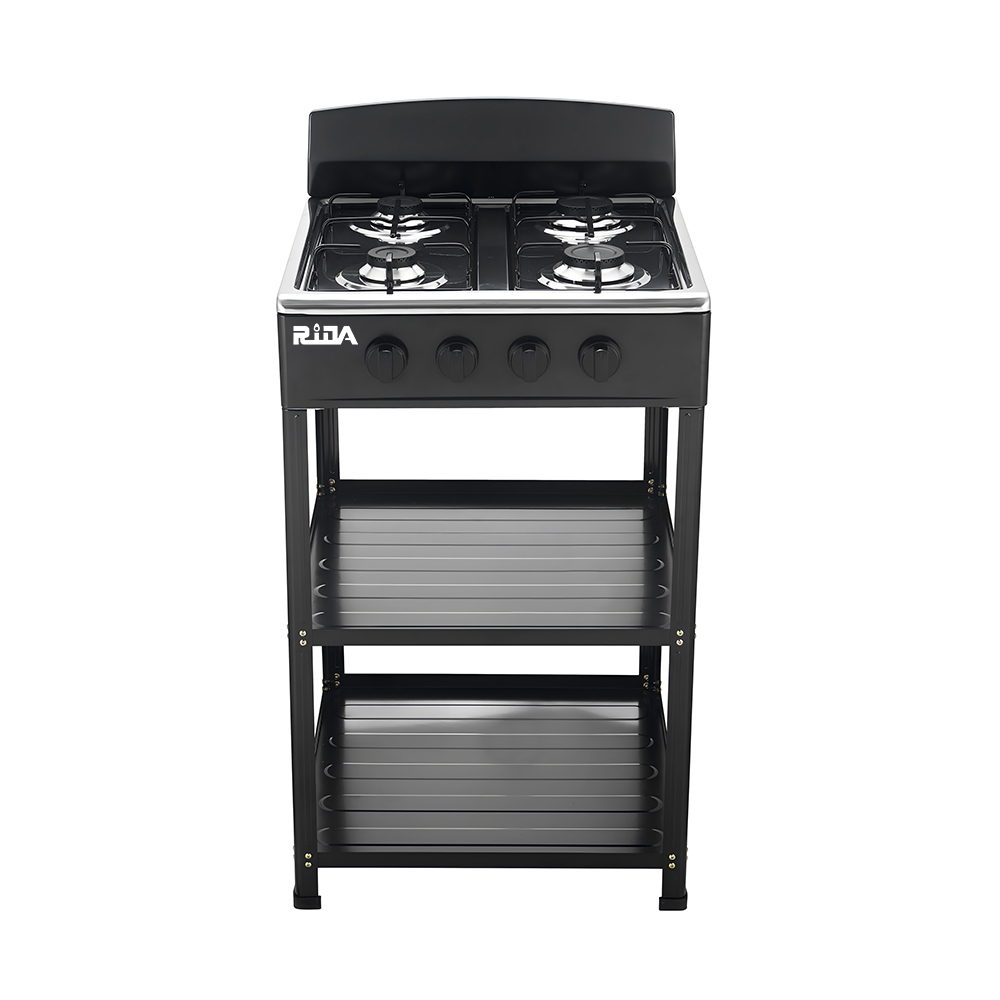
Many households rely on a heavy-duty freestanding gas stove as a secondary cooker for high-frequency, large-volume meals. If you have a semi-enclosed utility room, a screened-in porch, or a well-ventilated garage, this appliance takes the beating that would ruin a delicate glass-top indoor range. You can drop a 40-quart aluminum stockpot full of water onto the cast iron grates without worrying about cracking the surface or scratching the finish.
The culinary benefits of cooking with gas become obvious the moment you fire it up. Gas burners give you immediate thermal feedback and absolute control over the cooking process.
You get rapid heat-up times compared to electric coils, cutting down the wait significantly when boiling large volumes of water for pasta or seafood.
You control the heat instantly. When a pot threatens to boil over, turning the dial cuts the energy immediately, whereas electric elements stay hot for minutes after you turn them off.
The open flame wraps around the curved bottom of traditional cookware like a wok, providing even heat distribution up the sides that flat electric elements cannot match.
You can visually monitor the flame size to gauge the energy output, adjusting on the fly for searing thick cuts of meat or dropping the flame to a whisper for simmering delicate sauces.
Emergency preparedness drives many people to keep one of these units on hand in their garage or storage shed. When severe weather knocks out the electrical grid, your modern kitchen goes dark. A standalone gas unit keeps your household running smoothly. You can boil water for sanitation, heat up canned goods, and cook perishable food before it spoils in the refrigerator. Having a reliable, mechanical cooking method provides massive peace of mind during hurricane season or winter storms.
However, you must follow strict safety protocols if you move the unit indoors. Operating any high-output gas appliance indoors requires aggressive ventilation. Carbon monoxide builds up quickly and silently in enclosed spaces. If you use the stove in a utility room, you must open multiple windows, run commercial-grade exhaust fans, and keep a battery-operated carbon monoxide detector nearby. Cross-ventilation is mandatory to sweep the exhaust gases out of the building.
Moving messy cooking tasks outside saves your home interior from long-term damage. Heavy frying, deep-frying, and high-heat stir-frying generate aerosolized grease and thick smoke. If you fry fish, sear steaks, or toast heavy spices indoors, those odors embed themselves into your drywall, curtains, and cabinetry. Your standard indoor range hood usually lacks the CFM (cubic feet per minute) power to exhaust that volume of smoke effectively. Setting up outside keeps your indoor air clean and reduces the load on your HVAC system.
The menu possibilities expand dramatically when you have access to high-BTU burners. These units handle tasks that require massive thermal output that indoor stoves simply cannot generate.
High-heat stir-fry: You can achieve authentic wok hei. The intense flames heat the carbon steel wok to the smoking point, searing the food instantly and locking in the crisp texture of vegetables.
Large-batch boiling: You can process seasonal harvests easily. Boiling dozens of ears of corn, cooking bulk pasta for a crowd, or doing a full seafood boil with crabs and crawfish requires a massive, sustained heat source.
Slow-cooked comfort foods: You can leave heavy stews, bone broths, and chili simmering for hours outside without heating up your main kitchen during the hot summer months.
Home brewing and canning: Processing large water bath canners or boiling wort for beer demands a sturdy base that can hold 50 pounds of liquid safely over a consistent flame.
Beyond the backyard patio, these stoves serve as the primary kitchen for van life, camping, and tailgating. When you take a multi-burner stove on the road, you transform a dirt campsite into a highly functional kitchen. Long-term travelers rely on these units because they withstand the vibration of travel and the abuse of daily outdoor use. The elevated stand means you stand upright while cooking. You avoid hunching over a tiny backpacking stove balanced on a rock, making daily meal prep sustainable and comfortable while living off-grid.
Selecting the right unit means matching the hardware to your specific cooking style and environment. You need to evaluate the burner configuration and the raw heat output first. Single-burner models give you maximum portability and take up very little space in a truck bed. They work perfectly for a single large stockpot or a turkey fryer. Multi-burner configurations, like a 2-burner or 3-burner setup, let you manage complex meals simultaneously. You can boil potatoes on one side while searing steaks on the other, just like you would indoors.
Pay close attention to the BTU (British Thermal Units) rating. A burner pushing 30,000 to 60,000 BTUs handles outdoor deep-frying and wok cooking easily, recovering heat quickly when you drop cold food into hot oil. Lower BTU outputs work better for gentle simmering and everyday pan-frying. If the BTUs are too high and the valves lack fine control, you will scorch smaller pans and burn your food.
Materials dictate how long the appliance survives outside in the elements. Look for stainless steel frame construction. Stainless resists rust, which is mandatory if you live in a coastal area, a high-humidity climate, or if you plan to leave the stove on your patio year-round. Painted steel frames eventually chip, allowing moisture to penetrate and rust the metal. The burner heads should be heavy cast iron. Cast iron withstands extreme temperature fluctuations without warping and retains heat efficiently.
Wind protection makes a massive difference in outdoor performance. You need integrated, removable wind-blocking panels around the burners. Without wind guards, a mild breeze blows the heat away from the bottom of your pot. This increases your cooking time drastically and burns through your propane supply rapidly. Wind guards channel the thermal energy directly upward into the cookware, maximizing fuel efficiency.
Finally, look at the prep space and storage solutions built into the frame. Stoves with integrated side shelves give you a place to set your tongs, oil bottles, and raw ingredients right where you need them. Some models include bottom storage racks for holding the propane tank or extra pots. If the unit lacks shelves, you will need to set up a separate folding table nearby to handle your food prep, which increases your setup time.
When you build an outdoor kitchen or pack for a long camping trip, you have several equipment options. Comparing them directly helps you pick the right tool for the job and avoid wasting money on gear that doesn't fit your workflow.
Feature | Gas Stove with Stand | Tabletop Gas Burner | Portable Induction Cooktop |
|---|---|---|---|
Stability and Base | High. The integrated legs provide a secure, dedicated base that won't shift under heavy pots. | Variable. It depends entirely on the strength and heat resistance of the table you place it on. | High. It sits flat but requires a perfectly level, hard surface to operate safely. |
Workspace Impact | Self-contained. It frees up your table space entirely for food prep, cutting boards, and serving. | Intrusive. It consumes valuable table space and creates a severe fire hazard on plastic tables. | Intrusive. It takes up table space and requires you to stay tethered near an electrical outlet. |
Power Source | Propane or Natural Gas. Completely off-grid capable and runs for days on a single tank. | Small propane or butane canisters. Good for short trips but expensive for daily use. | 1800-watt electricity. Requires grid power, a massive battery bank, or a large generator. |
Cookware Compatibility | Universal. Works perfectly with round-bottom woks, rough cast iron, and cheap aluminum pots. | Universal, but strict weight limits apply based on the table's capacity to hold the pot. | Strict. Requires flat-bottomed, magnetic cookware only. No aluminum, copper, or round woks. |
Weather Resistance | Excellent. Built to handle wind, minor rain, and outdoor humidity without failing. | Moderate. Often lacks wind guards and struggles to maintain heat in breezy conditions. | Poor. Electronic components cannot get wet, and touch controls fail if your hands are damp. |
An 1800-watt induction cooktop offers precise low-temperature control and boils small amounts of water quickly, but it falls short for heavy-duty outdoor tasks. You cannot use a traditional round-bottom wok on a flat glass induction surface, and you cannot use large aluminum stockpots for brewing. A gas unit remains superior for raw heat output, universal cookware compatibility, and absolute reliability during power outages or deep wilderness camping.
Building a functional outdoor cooking station does not require a massive budget or professional contractors. You start by sourcing a sturdy stove and pairing it with a standard 20-pound refillable propane tank. Do not rely on small, disposable 1-pound green canisters for daily cooking. They freeze up under high draw, deplete quickly, cost more per ounce of fuel, and generate unnecessary metal waste.
You can extend your workspace cheaply and effectively. Set up a folding resin table next to the stove for prep work. Keep this prep area separate from the open flame to improve your workflow and maintain safety. Ensure the prep table is easily washable and keep combustible materials like paper towels, plastic wrap, and cardboard boxes far away from the burners. Route your gas hose carefully so it does not become a tripping hazard between your prep table and the stove.
Safety during setup is non-negotiable. You must follow a strict connection and leak test protocol every time you hook up a new propane tank or move the stove to a new location.
Inspect the rubber O-ring inside the tank valve for cracks, dry rot, or debris. A damaged O-ring will never seal properly.
Attach the regulator securely to the tank valve. Ensure the threads align perfectly and hand-tighten the fitting. Do not use a wrench, as you can strip the soft brass threads.
Mix a solution of liquid dish soap and water in a small spray bottle.
Apply the soapy water generously to the hose connections, the regulator body, and the tank valve.
Slowly open the gas tank valve to pressurize the line. Watch the soapy areas closely.
Inspect for expanding bubbles. Bubbles indicate a dangerous gas leak. If you see them, close the valve immediately, retighten the connections, and test again.
Once you verify the system is completely leak-free, open the burner valve slightly to clear the line of trapped air.
Light the burners safely using the built-in ignition or a long-reach barbecue lighter. Keep your face and arms away from the burner grate during ignition to avoid flare-ups.
To get your outdoor cooking station operational and safe, follow these immediate steps:
Measure your patio or campsite footprint to ensure you have a 3-foot clearance on all sides of the stove, keeping it away from vinyl siding, wooden rails, and low-hanging branches.
Purchase a dedicated 20-pound propane tank and a heavy-duty weather cover to protect the equipment from rain, dust, and debris when not in use.
Test your existing cookware on the cast iron grates to confirm the pots sit flat, do not tip over the burner rings, and can handle the high BTU output.
Run a complete soapy water leak test on all gas fittings and hoses before lighting the burners for the first time.
A: No. Using an outdoor-rated gas stove indoors is highly dangerous due to carbon monoxide risks and massive heat output. You must only use them outdoors, in highly ventilated semi-outdoor spaces, or under commercial-grade exhaust systems designed specifically for high-BTU gas appliances.
A: Wait for the unit to cool completely. Remove the cast iron grates and wash them with warm, soapy water. Wipe down the stainless steel frame with a non-abrasive degreaser and a microfiber cloth. Dry all components thoroughly to prevent surface rust.
A: Auto-ignition uses a built-in piezoelectric spark to light the gas when you turn the knob. Manual ignition requires you to use an external flame, such as a long-reach barbecue lighter or match, to ignite the gas after opening the burner valve.
A: Most outdoor stoves are designed to connect to standard 20-pound propane tanks using a specific hose and pressure regulator. Always verify that the regulator provided matches the pressure requirements of the stove and the valve type of your tank.
A: Yes. Wind guards are highly recommended even in covered areas. Cross-breezes easily disrupt the flame, causing uneven heating, increasing cooking times, and wasting propane. Wind guards ensure the thermal energy directs straight up into your cookware.


