

close
Choose Your Site
Global
Social Media
Views: 0 Author: Site Editor Publish Time: 2026-07-21 Origin: Site


The increasing demand for modular, high-efficiency kitchen setups in both residential and light-commercial spaces is driving a shift away from permanent, built-in cabinetry. Buyers face a structural dilemma when upgrading kitchen equipment. Built-in hobs require expensive custom carpentry and permanent commitment. Standard countertop stoves often lack ergonomic height and waste valuable vertical space. Additionally, users transitioning from traditional electric cooktops often seek faster cook times without undertaking a full kitchen remodel. A Gas Stove with Stand offers a hybrid solution. It combines the high-BTU performance and precise heat control of traditional gas cooking with structural independence, portability, and integrated storage. This guide evaluates the technical, spatial, and financial criteria for adopting a standing gas cooker or open-frame utility stove.
Ergonomic and Spatial Efficiency: Integrated stands elevate the cooking surface to standard working heights (typically 34–36 inches) while repurposing the undercarriage for heavy cookware storage or integrated appliances.
Cost-Effective Modularity: Bypasses the need for custom countertop fabrication and cabinetry, significantly lowering the total cost of installation compared to built-in drop-in hobs.
High-Performance Output: Retains the core advantages of gas cooking—instant heat, visual flame control, and rapid temperature transitions—essential for high-heat techniques like wok cooking or searing.
Grid Independence: Provides operational reliability during electrical power outages, as gas burners can be manually ignited without grid power.
Deployment Flexibility: Ideal for rental properties, outdoor kitchens, or commercial prep stations due to its freestanding nature and simplified relocation requirements.
Establishing the baseline requirements for kitchen upgrades requires careful planning and site evaluation. You must evaluate available square footage, utility connection points, and the permanence of the installation. Renters and temporary leaseholders need mobility, while homeowners might prefer fixed assets. Balancing these factors ensures a successful kitchen workflow without overcommitting resources to structural modifications that cannot be easily reversed.
Kitchen cooking appliances generally fall into distinct structural categories. Each serves different spatial and functional needs based on the user's environment.
Built-in Hobs: Require custom countertop cutouts. They are permanent and aesthetically seamless but structurally rigid, making future upgrades difficult.
Countertop Stoves: Have a low upfront cost. They consume existing prep space and often lack stability for heavy-duty cooking or large stockpots.
Gas Stove with Open-Frame Stand: A self-supported unit featuring a heavy-duty frame. It includes integrated lower shelving and independent leveling legs for maximum utility.
Standing Gas Cooker (All-in-One Range): A fully enclosed freestanding appliance. It integrates top burners with an under-counter gas or electric oven cavity.
Choosing the right appliance means weighing aesthetic preferences against functional modularity. Thermal output determines how fast you can boil water or sear meats. Load-bearing capacity matters if you use heavy cast iron or large stockpots. Ease of maintenance is another critical factor. Open frames allow quick floor cleaning, while sealed units trap debris at the edges.
Appliance Type | Installation Complexity | Mobility | Storage Utility | Load Capacity |
|---|---|---|---|---|
Built-In Hob | High (Requires custom cuts) | Permanent | None (Occupies cabinet space) | Medium (Depends on counter) |
Countertop Stove | Low (Plug and play) | High | None (Consumes counter space) | Low (Prone to tipping) |
Gas Stove with Stand | Low (Freestanding setup) | Medium | High (Open lower shelving) | High (Direct floor support) |
All-in-One Range | Medium (Heavy to move) | Low | Medium (Oven space only) | High (Self-supporting) |
Gas combustion provides immediate thermal transfer to your cookware. There is zero lag time when adjusting the heat. This even distribution works perfectly across uneven cookware bottoms, like woks or cast iron skillets. For the first-time gas user, visual flame adjustment offers intuitive feedback. You do not have to guess the temperature like you do with cycling electric elements. Freestanding models often feature higher BTU output capabilities compared to standard residential drop-ins. This makes them ideal for rapid boiling and intense searing.
When evaluating burner performance, consider the specific BTU ratings required for your cooking style. A standard residential burner might output 7,000 to 12,000 BTUs, which is sufficient for basic simmering and pan-frying. However, a heavy-duty freestanding unit often features burners rated at 15,000 to 30,000 BTUs or higher. This massive increase in thermal power allows for authentic wok hei in Asian cuisine and rapid recovery times when dropping cold ingredients into hot oil. The open-frame design also facilitates better oxygen flow to the burners, ensuring a cleaner, hotter blue flame.
Pre-calibrated stand heights reduce user fatigue. They align the cooking surface with natural biomechanics, usually around 34 to 36 inches high. This prevents hunching over low countertops. Structural integrity is a massive advantage. A standing gas cooker easily supports high-capacity stockpots. It handles heavy commercial cookware without stressing residential countertops. The robust metal frame distributes weight directly to the floor.
Consider the physical mechanics of boiling a 40-quart pot of water for pasta or brewing. That volume of liquid weighs over 80 pounds. Placing that much concentrated weight on a standard quartz or granite countertop with a drop-in hob risks cracking the stone or warping the thin metal chassis of the appliance. A unit with an integrated stand transfers that static load straight down through heavy-gauge steel legs to the floor, completely bypassing your fragile kitchen surfaces.
The secondary function of the stand is highly practical. Open-air lower shelving stores bulky items efficiently. You can keep gas cylinders, oversized pots, and sheet pans within arm's reach. This contrasts with enclosed oven compartments that limit storage shapes. Airflow benefits are also significant. Open stands prevent moisture buildup in humid environments. They make floor cleaning highly accessible compared to sweeping around enclosed cabinetry.
A Gas Stove with Stand offers excellent off-grid utility. Physical ignition bypasses electric grid failures. You can use a match or lighter to start the burners safely. This ensures hot meal preparation during severe power outages. For areas with unstable electricity, this reliability is indispensable.
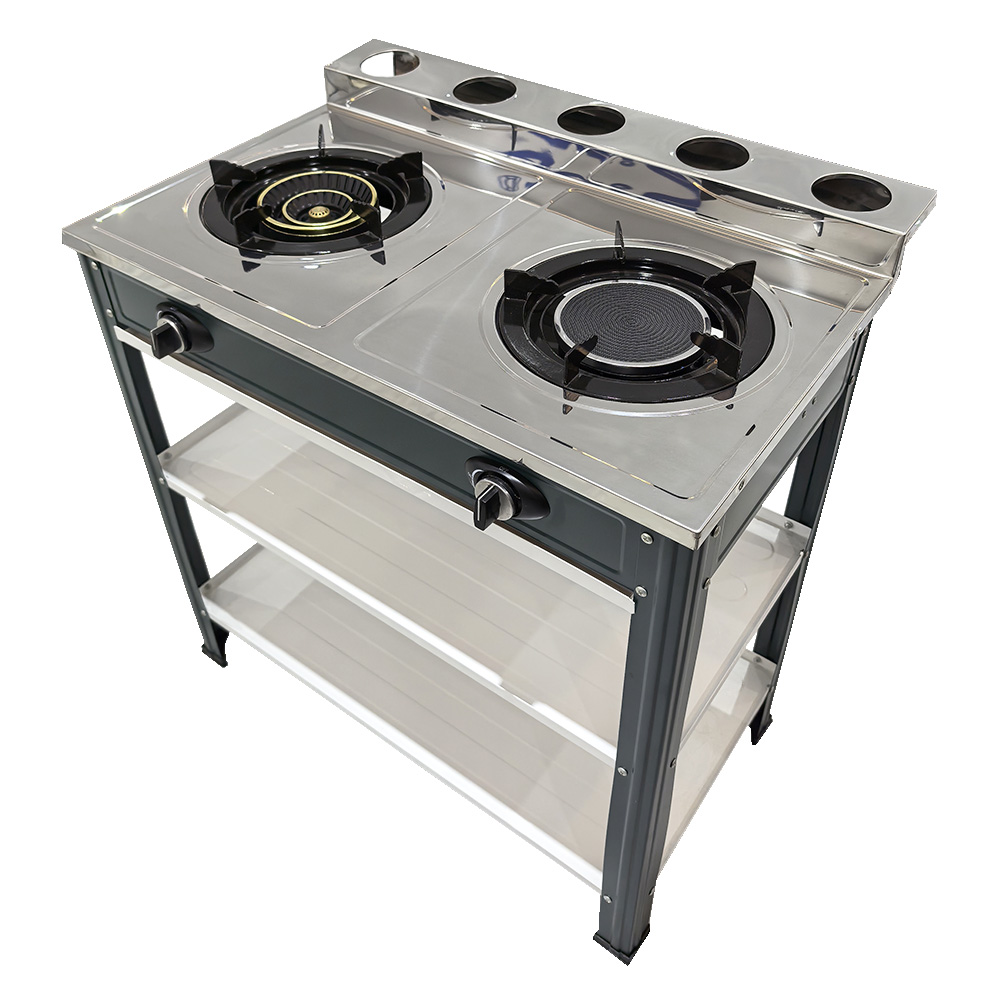
A freestanding unit eliminates the need for expensive countertop fabrication. You avoid the combined cost of a drop-in hob, quartz cutting, and custom base cabinets. This keeps your renovation budget manageable. Time-to-deployment is another major benefit. The unit achieves immediate operational readiness once gas lines are connected. You eliminate long contractor wait times and messy construction phases.
To properly install a freestanding unit, follow these practical steps to ensure safety and compliance:
Measure the installation footprint, ensuring at least 6 inches of clearance from combustible walls on the sides and rear.
Adjust the threaded leveling legs using a spirit level placed directly on the burner grates to ensure a perfectly flat cooking surface.
Connect the flexible gas line to the main supply valve, ensuring you use the correct thread sealant rated for gas applications.
Perform a leak test by applying a soapy water solution to all connection points and watching for bubbles when the gas is turned on.
Install anti-tip brackets to the floor or rear wall to prevent the unit from shifting during heavy use.
You can move these units for seasonal use. Transitioning from an indoor prep kitchen to an outdoor patio is straightforward. They are excellent for catering setups. Renters benefit greatly from this portability. Temporary leaseholders can retain ownership of their capital equipment upon relocation. You simply disconnect the unit and take it to your next property.
Proper installation requires flexible gas line routing. Quick-disconnect fittings make moving the unit easier and safer. You must evaluate overhead clearance for safety. Range hoods need specific CFM ratings when placing a freestanding unit in a non-traditional layout. Always ensure your ventilation matches the BTU output of the burners.
Stainless steel standing models offer a superior lifecycle compared to cheaper countertop alternatives. They resist rust and physical impact. Operating costs over time generally favor gas. You should compare local gas consumption rates against electrical utility tariffs. Modularity impacts repairability directly. Accessing valves and burners is significantly easier on an open-stand model than a sealed built-in unit. You save money on maintenance labor.
Routine maintenance on an open-frame unit is straightforward. You can easily reach under the burner assembly to clean out grease traps or replace a faulty thermocouple. On a built-in unit, replacing a simple valve often requires pulling the entire appliance out of the countertop, risking damage to the surrounding stone and requiring specialized tools. The open architecture of a standing unit turns a two-hour service call into a ten-minute fix.
There is a visual trade-off to consider. The industrial, utilitarian look of a standing unit may clash with minimalist residential designs. It looks professional but less integrated. Cleaning realities also differ. Open stands expose the floor to grease and spills. This requires different maintenance protocols than wiping down sealed cabinetry. You will need to mop under the unit regularly.
Standard gas-on-gas setups are simple and reliable. However, dual-fuel standing cookers offer a compelling alternative. They pair gas burners with an electric oven. This provides consistent heat distribution and baking precision. Gas ovens can have hot spots, making electric baking preferable for pastries. You must weigh the need for baking precision against the simplicity of a single utility connection.
Uneven floors pose a significant risk. They can cause dangerous instability when boiling large volumes of liquid. A wobbly stove is a severe burn hazard. You must mitigate this through proper installation. Mandatory use of adjustable, heavy-duty leveling feet is required. Anti-tip brackets secure the unit firmly to the wall or floor.
Placing a high-BTU freestanding unit too close to drywall is dangerous. Wooden cabinets and unprotected flooring are also at risk. Heat transfer can cause fires over time. Strict adherence to manufacturer-specified clearance zones is non-negotiable. Typically, you need 6 to 12 inches of space from combustibles. Installing stainless steel heat shields offers additional protection.
Improper routing of LPG hoses creates trip hazards. Running lines through open spaces introduces wear points and hazardous leaks. You must manage the gas supply carefully. Utilize rigid piping where possible. Use armored flexible hoses for the final connection. Proper regulator selection is critical for consistent pressure. Mandatory installation of combustible gas and carbon monoxide detectors in the immediate vicinity ensures safety.
A gas stove with a stand provides raw cooking performance, modularity, and budget efficiency. Buyers should base their final selection on required BTU output and spatial dimensions. Choosing between an open frame and an integrated oven range dictates your kitchen workflow. Preferring 304 stainless steel ensures long-term durability.
Measure the intended installation footprint accurately before purchasing.
Verify local building code requirements for freestanding gas appliances and ventilation.
Consult a certified gas fitter for safe line installation or LPG cylinder placement.
Install carbon monoxide and combustible gas detectors near the cooking area.
A: The main advantage is the elimination of custom cabinetry costs. It offers a higher weight capacity for heavy pots and easier cleaning access. You also gain the flexibility to relocate the unit whenever necessary.
A: Yes, indoor use is safe provided the unit is specifically rated for indoor use. Proper ventilation and exhaust hoods must be installed. Safety clearances from combustible materials must be strictly maintained.
A: Yes. Manual ignition of the gas burners allows the cooktop to function perfectly. You can cook meals even when the home is completely disconnected from the electrical grid.
A: A gas stove with a stand typically features an open utility shelf or a simple gas oven. A dual-fuel standing cooker combines a gas-burning cooktop with a high-precision electric oven for better baking.
A: They require specific setups depending on the fuel source. Natural Gas (NG) and Liquid Propane (LPG) setups use different orifices. You need the appropriate regulators and certified flexible gas lines for safe operation.
A: You use the threaded, adjustable leveling legs located at the base. It is important to use a spirit level across the cooking grates during installation to ensure safe, even cooking.
A: They pose risks due to exposed lower areas and hot surfaces. You should use anti-tip hardware and burner locks. Strategic placement away from high-traffic walkways minimizes accidental contact.


