

close
Choose Your Site
Global
Social Media
Views: 0 Author: Site Editor Publish Time: 2026-07-20 Origin: Site


The operational shift toward modular, high-capacity cooking setups has made freestanding gas units a critical consideration for both commercial environments and heavy-duty domestic kitchens. Selecting a kitchen gas stove with stand requires balancing high-output thermal performance with structural stability, spatial constraints, and strict safety compliance. An incorrect choice leads to workflow bottlenecks, excessive maintenance costs, or hazardous gas line incompatibilities. This guide provides a technical evaluation framework to assess burner configurations, material integrity, and implementation risks, ensuring the selected equipment aligns with specific operational demands and budget constraints without compromising daily kitchen efficiency.
Thermal Output Dictates Application: Match total BTU capacity to your specific cooking volume; over-specifying wastes fuel and requires expensive ventilation upgrades.
Form Factor Defines Utility: Decide early between an open storage stand (for cookware access) and a freestanding range base (with integrated oven capacity).
Structural Integrity is Non-Negotiable: The stand’s material gauge and leveling capabilities directly impact safety, especially when handling heavy stockpots or high-friction cooking techniques.
Ventilation and Compliance Drive Feasibility: Installation requires strict adherence to local gas codes, clearance minimums, and commercial or residential exhaust requirements.
Maintenance Impacts Operational Expenses: Units with seamless tops, sealed burners, removable drip trays, and accessible gas valves significantly reduce daily labor costs and downtime.
Accurate measurement prevents installation failures and workflow disruptions. Begin by mapping the physical footprint requirements in your kitchen. Measure the available width, depth, and vertical height, accounting for baseboards and wall irregularities. You must also calculate mandatory clearance zones around the unit to prevent fire hazards and ensure proper airflow. Evaluate how the stove's placement impacts the primary kitchen work triangle. The unit should enhance traffic flow, allowing multiple cooks to operate without colliding. Finally, measure all entryways, hallways, and doorways leading to the kitchen. A high-capacity unit is useless if it cannot physically pass through the building's access points during delivery.
When mapping the layout, consider the swing radius of oven doors if you opt for an integrated base, or the space needed to pull out large storage bins from an open stand. Mark the floor with tape to visualize the exact footprint. This physical representation often reveals spatial conflicts that blueprints miss. Ensure that adjacent prep tables and refrigeration units are within a single pivot step to maximize efficiency.
Choosing the right base configuration depends entirely on your daily workflow and existing equipment. An open-frame stand optimizes rapid cookware access. It is generally lighter, easier to clean underneath, and provides immediate visual inventory of your pots and pans. Conversely, a freestanding gas range features an integrated oven cavity. This maximizes vertical space by combining surface cooking and baking in one footprint. Evaluate whether you need dedicated under-counter storage for large stockpots or if integrated roasting capacity is more critical for your menu.
Configuration Type | Primary Advantage | Weight & Mobility | Storage Capability | Maintenance Profile |
|---|---|---|---|---|
Open Utility Stand | Immediate access to heavy cookware | Lighter, easier to shift for cleaning | High capacity for large pots and pans | Easy floor access, simple wipe-downs |
Integrated Oven Base | Maximizes vertical cooking capacity | Heavier, requires robust flooring | None (space utilized by oven cavity) | Requires moving the heavy unit for floor cleaning |
Calculate your daily cooking volume and peak-hour demands before selecting a unit. High-volume environments require robust structural support and rapid recovery times. Specific cooking techniques dictate the necessary burner style. High-heat wok cooking demands intense, concentrated flames and specialized ring grates. Slow simmering requires precision low-BTU control to prevent scorching delicate sauces. Heavy stockpot boiling requires maximum structural load capacity from the grates and the stand itself. Match the equipment to the menu to avoid premature component failure.
Consider the thermal shock your equipment will endure. Rapidly transitioning from high heat to cold liquid deglazing stresses cast iron grates and burner manifolds. If your cooking style involves constant heavy impacts from tossing pans, prioritize units with continuous, heavy-duty grates that distribute the physical force across the entire frame rather than isolating it on a single burner head.
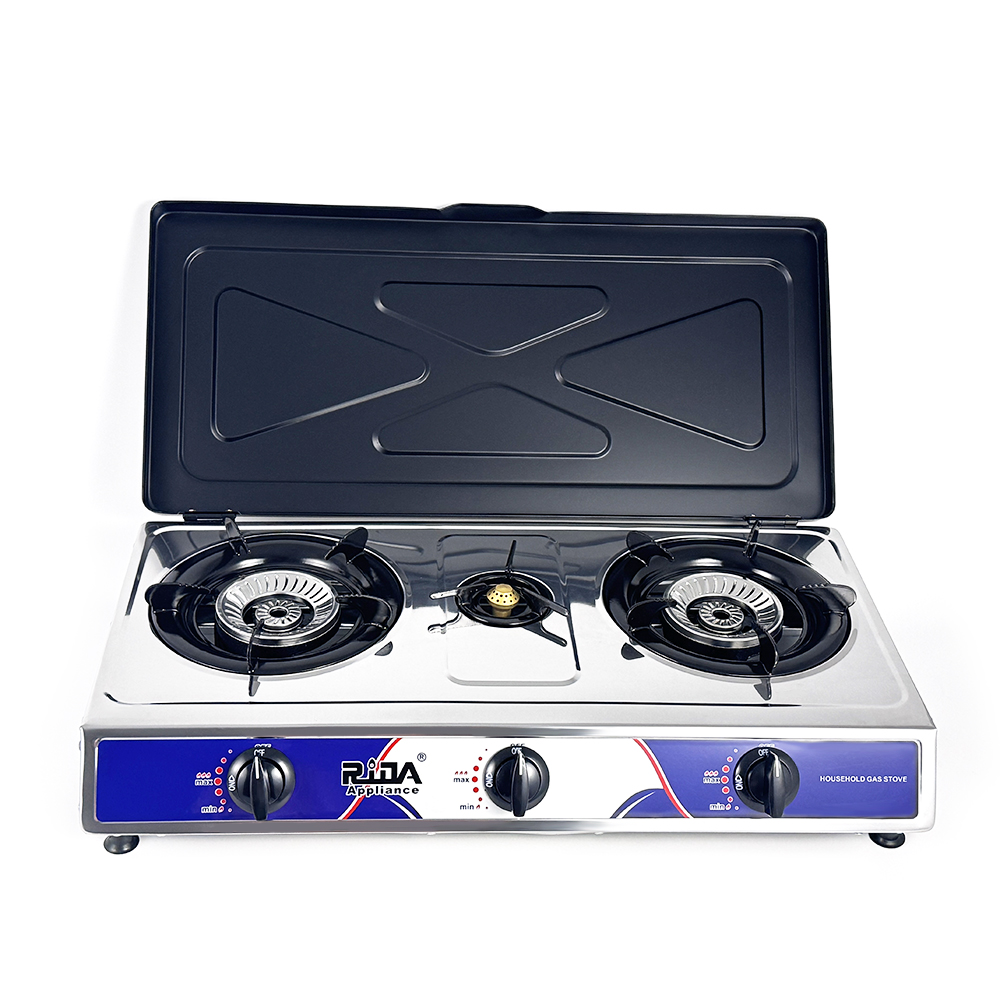
British Thermal Units (BTUs) measure heat output. Standard cooking tasks require lower BTUs, while heavy-duty searing demands high output. High-BTU power burners excel at rapid boiling and maintaining heat when large volumes of cold food are added to a pan. Precision simmer burners prevent delicate sauces from scorching. Avoid the common mistake of over-specifying BTUs. Excessive heat output triggers mandatory requirements for costly makeup air systems and upgraded exhaust hoods. Balance power with practical ventilation limits.
To determine your actual BTU needs, audit your most demanding dishes. If you primarily boil pasta or reduce large batches of stock, high BTUs are essential. If your menu relies on delicate egg dishes or slow-braised meats, lower BTU burners with dual-ring flame control offer better results. Mixing burner types on a single cooktop often provides the most versatile solution for dynamic kitchens.
Burner design impacts both performance and daily maintenance. Sealed burners are locked into the cooktop, preventing spills from entering the internal housing. This makes them spill-proof and exceptionally easy to clean, which is why they are standard in residential setups. Open burners provide maximum oxygen flow, delivering higher thermal efficiency and direct flame-to-pan contact. However, open burners require intensive, regular cleaning to prevent grease buildup and component failure, making them better suited for environments with dedicated cleaning staff.
When evaluating open burners, look for models with deep, removable catch trays. These trays capture the inevitable boil-overs and debris that fall through the open grates. Without deep trays, cleaning an open burner system becomes a tedious process of dismantling the entire top section of the stove.
Standard open layouts suit general tasks, allowing multiple medium-sized pans to sit side-by-side. Step-up configurations elevate the rear burners, allowing easier access to back pots without reaching over front flames, which improves safety and ergonomics. Specialized layouts include wok rings or integrated griddles for specific menu items. Grate material is equally vital. Cast iron offers superior heat retention and durability but is heavy and requires regular seasoning to prevent rust. Heavy-duty stainless steel or enamel-coated grates are easier to clean and provide lower surface friction for sliding heavy pans across the cooktop.
Assess the weight of your heaviest fully loaded pot.
Verify the manufacturer's weight rating for individual grates.
Choose continuous grates if you frequently slide pans between burners.
Select cast iron for maximum heat retention during continuous service.
Opt for enamel-coated grates if rapid, end-of-shift cleaning is the priority.
Ignition systems dictate energy use and reliability. Standing pilot lights maintain a constant flame, requiring no electrical hookup, but they consume gas continuously and generate ambient heat. Electronic spark ignition is highly energy-efficient and generally safer, as it only sparks when the knob is turned. However, it requires a dedicated electrical connection. Evaluate control knob safety features carefully. Push-to-turn systems and child-safety locks prevent accidental ignition. Front-placed knobs offer better ergonomics but require stricter safety mechanisms to prevent activation by leaning against the unit.
Material quality determines equipment lifespan. Stainless steel grades matter significantly. Type 304 stainless steel provides superior corrosion resistance, essential for high-moisture, high-acid kitchen environments where tomato sauces and citrus are common. Type 430 is less resistant but more affordable. Metal gauge thickness directly correlates to load-bearing capacity. A 14-gauge steel frame supports massive stockpots without buckling or warping over time. An 18-gauge frame is thinner and suited only for lighter applications.
Inspect the welding on the stand. Continuous seam welds offer far greater structural integrity than spot welds. Spot welds can snap under the repeated stress of heavy pots being dropped onto the cooking surface. The quality of the finish also matters; a brushed finish hides scratches and fingerprints better than a polished mirror finish.
An uneven cooking surface is dangerous. Adjustable leveling legs are mandatory to ensure stability on sloped or uneven kitchen floors. They prevent hot liquids from pooling unevenly in pans, which causes uneven cooking and potential spill hazards. Consider mobility requirements. Fixed legs provide maximum rigid stability. Heavy-duty locking casters allow you to move the unit for deep cleaning behind and underneath the stove. Ensure casters feature robust locking mechanisms to prevent shifting during high-friction cooking.
If you choose casters, you must also install a flexible gas connector with a quick-disconnect fitting and a restraining cable. The restraining cable prevents the stove from being pulled too far from the wall, which could rupture the gas line.
Open-frame stands often feature integrated undershelves. These shelves are perfect for storing heavy cookware directly at the point of use, reducing the need to carry heavy items across the kitchen. Consider the ergonomic impact of the stand's working height. Standard heights align with adjacent countertops, typically around 36 inches. Proper working height reduces operator fatigue during extended cooking sessions. Adjustable legs allow fine-tuning to accommodate different user heights and match existing prep tables.
Industrial equipment must blend with your kitchen's design language. A professional commercial look suits modern minimalist spaces, adding a touch of rugged authenticity. Industrial residential designs benefit from heavy-duty stainless steel aesthetics. Evaluate backguard options. Low-profile backguards offer a sleek look and design harmony, ideal for island installations. High-shelf configurations provide excellent splash protection against walls and offer additional vertical storage for frequently used tools or holding plates.
Smooth, seamless cooktops are an operational necessity. They prevent the accumulation of fat, grease, and food debris. Avoid designs with sharp corners, deep folds, and exposed interior crevices. These areas trap particles, breed bacteria, and require specialized brushes to clean. Evaluate the grease management system. Removable drip trays, crumb catchers, and sloped grease troughs facilitate rapid end-of-shift cleaning. Efficient cleaning protocols reduce daily labor hours and maintain a sanitary cooking environment.
Look for units with stamped tops where the burner bowls are pressed directly into the main sheet of metal. This eliminates seams entirely. If seams are present, they should be fully welded and polished smooth, leaving no gaps for grease to penetrate the internal chassis of the stove.
Routine maintenance should not require specialized tools or a service technician. Assess the ease of removing grates, burner caps, and pilot assemblies. Quick removal allows for thorough deep cleaning in a sink or dishwasher. Front-accessible gas valves and internal components are critical. If a valve fails, front access minimizes service downtime. Technicians can perform repairs without moving the entire unit away from the wall, saving time and labor costs.
Verify your site's gas supply before purchasing. Natural Gas (NG) and Liquid Propane (LP) operate at different pressures. The equipment must match the supply to function safely and efficiently. If the factory configuration differs from your site, field conversion kits are necessary. These kits change the burner orifices and regulator settings. Only licensed professionals should perform gas conversions to prevent leaks, improper combustion, and carbon monoxide hazards.
Never attempt to run a natural gas stove on propane without a conversion kit. The higher pressure of propane will cause massive, uncontrollable flames, creating an immediate fire hazard. Always check the data plate on the back of the unit to confirm its factory fuel setting before installation.
Safety clearances are mandatory. Maintain strict distance between the stove and combustible surfaces, including walls and adjacent cabinetry. Review integration with existing HVAC systems. High-output stoves require appropriately sized exhaust hoods. Calculate the necessary CFM (Cubic Feet per Minute) based on total BTU output. High-CFM hoods often require makeup air systems to prevent negative pressure in the building, which can cause drafts and pull exhaust gases back into the room.
Total BTU Output | Minimum Recommended CFM | Makeup Air Requirement |
|---|---|---|
Up to 50,000 BTUs | 500 CFM | Rarely required |
50,000 - 100,000 BTUs | 1,000 CFM | Often required by code |
Over 100,000 BTUs | 1,500+ CFM | Mandatory in most jurisdictions |
Compliance protects your facility and ensures safety. Identify essential safety and sanitation certifications required for your specific application. Look for NSF, CSA, UL, or CE marks. These certifications verify that the equipment meets rigorous structural, sanitation, and safety standards. Using uncertified equipment in heavy-duty setups can void insurance policies, fail health inspections, and result in severe regulatory fines.
Evaluate the financial equation beyond the purchase price. Cheaper, lower-gauge models have lower upfront costs but degrade quickly under heavy use, requiring frequent repairs or complete replacement. Commercial-grade stainless steel units require a higher initial investment but offer superior longevity. Factor in fuel efficiency and daily maintenance labor. A unit that is easy to clean and highly efficient yields better long-term financial returns through reduced utility bills and lower labor hours.
A robust warranty protects your investment. Evaluate standard warranty terms, specifically covering parts and labor for at least one year. Verify the availability of replacement parts in your geographic region. Purchasing imported units with limited domestic service networks poses a significant risk. If a critical component fails, extended shipping times for replacement parts will cause unacceptable operational downtime, forcing you to alter your menu or lose revenue.
Consult a licensed gas fitter to verify your facility's line pressure and exhaust hood capacity before finalizing any equipment selection.
Measure all physical spaces, including doorways, hallways, and the final installation footprint, to ensure seamless delivery and compliance with clearance codes.
Select your base configuration by deciding if your daily workflow benefits more from quick-access open storage or integrated baking capacity.
Match your total BTU requirements to your specific cooking volume to avoid triggering expensive, mandatory ventilation upgrades.
Establish a daily cleaning protocol based on the burner type and grate material you select to maximize the lifespan of the equipment.
A: The standard working height is typically 36 inches. This aligns perfectly with standard kitchen countertops. Most units feature adjustable legs that allow you to modify the height by 1 to 2 inches to accommodate uneven floors or specific ergonomic needs.
A: Yes, but it involves significant complexities. Installing commercial equipment in a residence often voids manufacturer warranties and can violate home insurance policies. You must also install commercial-grade ventilation and implement zero-clearance insulation to meet residential fire codes safely.
A: Your choice is dictated entirely by your existing infrastructure. Natural Gas is the standard for properties connected to municipal utility lines. Liquid Propane is typically used in rural areas or mobile setups where municipal lines are unavailable. Conversion kits can adapt stoves to either fuel source.
A: Sealed burners are locked into the cooktop, preventing spills from leaking into the stove's interior, making them very easy to clean. Open burners have exposed ports that provide direct flame-to-pan contact for higher thermal efficiency, but they require much more intensive daily cleaning.
A: The best material is 14-gauge or 16-gauge Type 304 stainless steel. This specific grade and thickness provide maximum resistance to corrosion in high-moisture environments while delivering the exceptional load-bearing capacity required to safely support heavy stockpots and rigorous daily use.


