

close
Choose Your Site
Global
Social Media
Views: 0 Author: Site Editor Publish Time: 2026-10-28 Origin: Site


Are you waiting endlessly for a pot of water to boil? Perhaps you are struggling to get a decent sear on a steak. You might find yourself wondering about your stove's true power. Many users misunderstand the actual heat output of glass-surface stoves. This confusion leads to lingering doubts. Are they genuinely efficient for daily, rigorous cooking?
Let us look at the exact temperature ranges these appliances achieve. We will break down the underlying mechanics from an engineering perspective. This technical insight will help you maximize the potential of your kitchen setup and eliminate slow heating times.
Maximum Temperatures: The surface reaches impressive temperatures of up to 300°C to 400°C. The hidden internal heating elements get significantly hotter.
How They Work: Coiled metal heating elements sit beneath tempered glass-ceramic. They transfer heat directly via infrared energy.
Cookware Matters: Flat-bottomed, heavy-gauge pots are absolutely essential. They ensure optimal heat transfer and prevent sensor fatigue.
Safety Features: Modern units utilize advanced residual heat indicators and thermal limiters. These components prevent accidental burns and glass damage.
Smart Upgrades: High-quality models feature faster heating times, precise digital control, and better overall energy efficiency.
Picture this scenario. You are prepping a thick ribeye steak. You need a blistering hot surface for that perfect restaurant-quality crust. Naturally, you question the maximum heat output of your sleek flat-surface stove. To fully grasp the thermal capacity, we must distinguish between internal components and the exterior cooking zone.
Interestingly, the glossy glass exterior you touch is not the true heat source. Hidden beneath the panel lie tightly coiled ribbons of resistive metal. These are typically crafted from a durable nichrome alloy. When activated, electricity flows through these coils. High resistance generates intense thermal energy. The metal emits a bright, glowing red light.
Internally, these ribbons reach staggering temperatures of up to 600°C. However, the glass-ceramic surface acts as a thermal buffer. By the time the infrared heat radiates through the glass and strikes the bottom of your cookware, the surface temperature typically maxes out between 300°C and 400°C.
Furthermore, manufacturers design the system with built-in thermal limiters. These safety switches constantly monitor the glass temperature. If the heat threatens to exceed safe operating limits, the switch automatically cuts power to the element. This crucial engineering detail prevents the panel from warping or shattering.
Understanding how these peak temperatures translate to everyday cooking is essential for culinary success. A quality appliance provides a broad spectrum of heat. It allows for everything from a delicate slow simmer to an aggressive hard sear. Below is a practical breakdown of how surface temperatures correspond to common cooking techniques:
Heat Setting | Estimated Surface Temp | Culinary Application | Ideal Foods |
|---|---|---|---|
Low | 60°C to 90°C | Keeping warm, melting | Melting chocolate, holding sauces, proofing |
Medium-Low | 100°C to 150°C | Simmering, slow cooking | Soups, stews, braising tough meats |
Medium | 160°C to 200°C | Frying, sautéing | Frying eggs, cooking pancakes, sautéing vegetables |
Medium-High | 210°C to 260°C | Searing, shallow frying | Searing chicken breasts, frying bacon |
High | 270°C to 400°C | Boiling, rapid searing | Boiling pasta water, hard-searing steaks |
Looking at current industry trends, recent market analyses highlight a massive shift toward electric radiant cooking. As urban living spaces shrink and sustainability initiatives push homeowners away from fossil fuels, the demand for high-heat, precision-engineered glass surfaces has surged. Kitchen appliance experts note that modern thermal limiters and advanced infrared technologies effectively bridge the performance gap between traditional gas flames and electric radiant heat. Today's high-efficiency models easily reach peak searing temperatures in seconds. This makes them a staple in contemporary kitchen renovations.
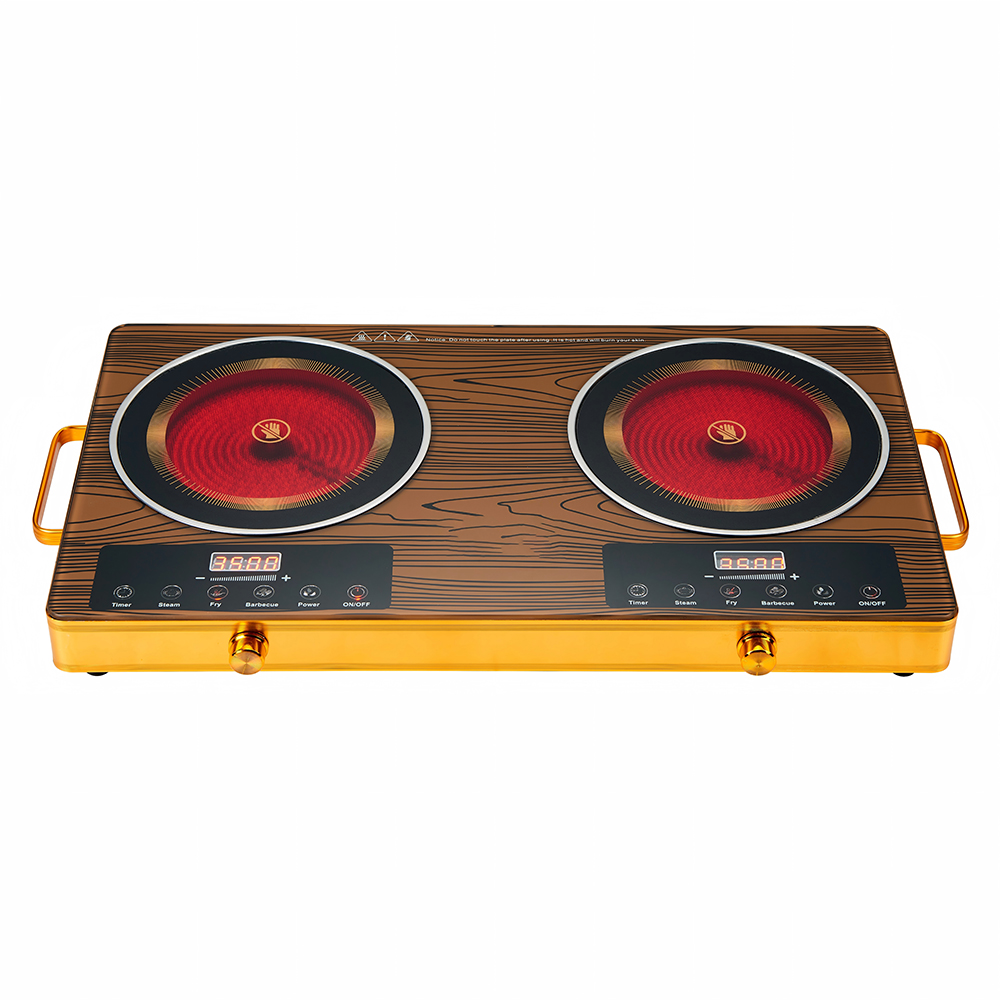
To truly master your kitchen equipment, understanding the underlying physics is essential. The process by which an electric ceramic hob heats food is a fascinating display of material science and electrical engineering.
When you turn on a burner, electrical current dispatches through the metal coils located just beneath the surface. The metal possesses high electrical resistance. It converts electrical energy into thermal energy. This heat emits primarily as infrared radiation.
Specifically, the glass-ceramic panel is uniquely engineered to be transparent to infrared wavelengths. Instead of absorbing all the heat itself, the glass allows the infrared energy to pass directly through. The radiant energy strikes the bottom of your pot. The cookware absorbs this energy, heats up via conduction, and cooks your food. Premium models often feature 2000W heating elements. This high wattage accelerates the initial heating phase and provides a much faster time-to-boil.
You might wonder why a glass surface does not shatter when exposed to 400°C heat. The secret lies in the specific material used. Traditional glass expands when heated and contracts when cooled. Rapid temperature changes cause uneven expansion. This leads to cracking, a phenomenon known as thermal shock.
In contrast, A-grade micro-crystal glass-ceramic has a coefficient of thermal expansion close to zero. It barely expands or contracts regardless of extreme temperature fluctuations. This makes it incredibly safe and highly durable for rigorous daily cooking.
Distinguishing between a ceramic cooktop and an induction model is vital. They look nearly identical on the surface. A ceramic model uses electrical resistance to generate radiant heat. Induction uses copper coils to generate a high-frequency magnetic field. Induction strictly requires magnetic pots. Ceramic models boast a major advantage. They are compatible with almost any flat-bottomed cookware material.
The interface of cooking appliances has seen significant technological advancements. We have shifted from clunky mechanical components to highly sensitive digital interfaces.
Historically, stoves relied on physical knobs attached to mechanical switches. Today, a modern touch control cooker utilizes capacitive sensors embedded seamlessly beneath the glass.
These sophisticated sensors detect the electrical capacitance of your finger. When you tap the designated zone, the microchip registers the command. It instantly adjusts the power output across 9 distinct power levels. This digital evolution provides precise, easily repeatable heat settings. It eliminates physical crevices where grease hides. It also allows for the integration of smart features like 120-minute countdown timers and automatic safety shut-offs.
A frequently asked question among new users is why the red glow keeps turning off during cooking. This behavior is completely normal. It is technically known as heat cycling.
Unlike gas burners that provide a continuous flame, heating elements operate at full power when on. To achieve a medium temperature, the internal thermostat utilizes a duty cycle. It turns the element on at 100 percent power for a few seconds, then completely off. This continuous cycling regulates the average temperature. It prevents the surface from exceeding its maximum thermal threshold.
Understanding the heat output is only half the equation. The other half is ensuring effective heat transfer. The physical connection between the burner and your pot is absolutely critical.
Imagine trying to sear a delicate fish fillet on a warped pan. The uneven heat distribution leaves half the fillet undercooked. Heat transfers primarily through direct physical contact and close-range radiant energy. Therefore, the bottom of your cookware must be perfectly flat.
If a gap exists between the glass and the pan, the infrared heat must travel through the air. Air acts as a terrible thermal conductor. This drastically increases boiling time. It also causes the internal sensors to overwork, potentially reducing the lifespan of the heating elements. Always test your cookware with a straight edge. If light passes through the middle, it is time for a replacement.
Not all metals react well to high temperatures. Choosing the right material ensures rapid heating and protects your appliance.
Stainless Steel with Aluminum Cores: Heavy-gauge stainless steel is highly recommended. Pans with an encapsulated aluminum core provide the perfect balance. They offer rapid heat distribution while maintaining a smooth exterior that will not scratch the glass.
Enamel-Coated Cast Iron: Cast iron retains heat beautifully for searing. However, never slide it across the surface. Always lift it vertically to prevent scratches.
Bare Copper and Lightweight Aluminum: These softer metals can melt slightly at high temperatures. This leaves permanent metallic streaks on the glass surface.
Glass and Ceramic Pots: These materials are poor heat conductors. They take an excessively long time to heat up and are prone to scratching the cooktop.
The surface easily reaches temperatures exceeding 300°C. Proper safety management is non-negotiable. Glass cooktops look deceptively cool even when holding severe thermal energy.
Modern appliances feature brilliant solutions to mitigate invisible heat risks. The residual heat indicator is a critical safety feature. Usually displayed as a bright red letter H on the digital interface, this warning light activates instantly.
Crucially, this indicator remains illuminated even after powering down. The sensors continuously monitor the surface. The warning only disappears once the glass cools down to a safe level below 60°C.
Patience is required. The cooling process takes time. Leaving a heavy pot on the inactive burner prolongs this process. The thermal mass traps the heat against the glass.
Furthermore, sugar is the absolute arch-enemy of a hot glass surface. If a sugary liquid boils over, it bonds with the glass as it caramelizes. When it hardens, it can permanently pit the surface. Always scrape away sugary spills immediately with a specialized scraper while the surface is warm.
If radiant heat technology fits your culinary style, selecting the optimal configuration is the next step. You need actionable criteria to match your daily habits.
Evaluate your spatial constraints. For sprawling family homes, a standard 4-zone cooktop is ideal. Conversely, if you are outfitting a compact apartment or an RV, an electric cooker 2 burner setup is an exceptionally smart choice. These streamlined units offer the exact same 2000W high-temperature performance as larger counterparts. They occupy a fraction of the counter space.
Prioritize appliances that integrate modern technology. Look for AC 220-240V compatibility for stable power delivery. Ensure the unit features 9-stage power settings for precise simmering and searing. A built-in 120-minute timer prevents overcooking. Finally, child safety locks and automatic shut-off mechanisms are mandatory for household security.
These cooking appliances get more than hot enough to handle any culinary task. With surface temperatures reaching up to 400°C, they execute everything from a gentle simmer to a rapid sear. Understanding how infrared heat transfers helps you optimize performance. Selecting flat-bottomed cookware and mastering digital controls ensures professional results.
Upgrading to a modern unit provides a sleek and highly reliable cooking experience. It elevates both the aesthetic and functionality of your kitchen. If you are ready to enhance your daily cooking routine, explore high-performance models tailored to your space. Visit Ridax Cooker to find the perfect match for your culinary needs.
Yes, they boil water very efficiently. High-quality models utilize powerful 2000W infrared heating elements. These transfer thermal energy rapidly. To speed up the boiling process, use a flat-bottomed pot that matches the burner diameter. Keep a tight-fitting lid on the pot to trap steam.
It certainly can if mishandled. The micro-crystal glass is highly durable but not impervious to rough edges. Sliding a heavy cast-iron skillet will likely leave micro-scratches. Opt for enamel-coated versions. Always lift the pan entirely off the surface to move it.
The illuminated H stands for Hot. This is a critical built-in safety mechanism. The glass retains significant thermal energy after the electrical element powers down. The indicator warns you that the surface is still dangerously hot. It automatically turns off once the glass cools.
Modern units are highly efficient. While they draw significant wattage during the initial heat-up phase, the internal thermostat utilizes heat cycling. The element turns on and off to maintain the target temperature. This cycling significantly reduces overall power consumption compared to older models.
Cooling times vary based on the cooking duration and ambient room temperature. Typically, it takes 15 to 35 minutes for the glass to return to a safe handling temperature. Removing hot pots immediately after cooking helps accelerate the cooling down process.


